 Build Your Future!
Driven by population growth (approximately 2.5% per year) and accelerated urbanization (around 1.2% per year), the demand for wheat flour in Nigeria continues to rise. Compared to large-scale flour processing factories, 30–100TPD small-scale flour mill of Nigeria offer flexible capacity, moderate investment thresholds, and shorter payback periods (3–5 years), making them more suitable for local business expansion and regional entrepreneurs entering the market.
Applications of Wheat Flour in Nigeria
According to official statistics and industry data, flour and related food consumption in Nigeria continues to grow at an annual rate of approximately 4%–6%, providing stable and predictable market opportunities for 30–100TPD small-scale flour mill of Nigeria. Key applications include:
Baking and Bread Production
-
Urban household bread consumption is significantly higher than the African average, with high-gluten and medium-gluten flour accounting for over 40% of total consumption.
-
Equipped with advanced wheat processing equipment and a well-planned wheat flour mill plant layout, flour quality stability can be ensured, supporting long-term orders and gross profit margins of approximately 15%–20%.
-
Using a professional flour for making bread configuration ensures consistent dough performance for bakeries and improves downstream product quality.
Noodles and Convenience Foods
-
Nigeria's processed food market grows at an annual rate of around 5.2%, with downstream noodle and instant noodle manufacturers demanding fine flour (80–100 mesh) and medium-coarse flour (60–80 mesh).
-
Consistent flour quality and stable protein content are essential for long-term collaboration in wheat processing in Nigeria.
Regional Distribution Opportunities
-
Lagos, Abuja, and Kano cities concentrate about 45% of flour end consumption, while state-level cities and local markets have distributed demand.
-
30–100TPD flour mill of Nigeria can flexibly serve core cities and surrounding areas, reducing long-distance transportation costs and improving supply efficiency.
Feed and By-product Utilization
By-products from wheat flour production, such as lower-grade flour, bran, and germ, can be supplied to local livestock (broilers, cattle) and aquaculture markets, creating additional profit streams and achieving a dual revenue model for food-grade and feed-grade products.
Combining official statistics and industry trends, Nigeria’s flour and related food consumption is frequent, rigid in demand, and large in market size. A 30–100TPD small-scale wheat flour mill that accurately matches market demand and controls operating costs can achieve stable profitability. For customized plant solutions and wheat flour processing equipment configuration, click the button below to contact ABC Machinery for professional consultation and quotations.

Plant Construction Process and Cost Consideration
Investing in or expanding a 30–100TPD flour mill plant in Nigeria requires systematic planning, considering local wheat supply (highly import-dependent), market demand distribution, and policy environment to maximize ROI. Whether you are a new entrant or an established local operator, the following process and cost analysis can guide your investment:
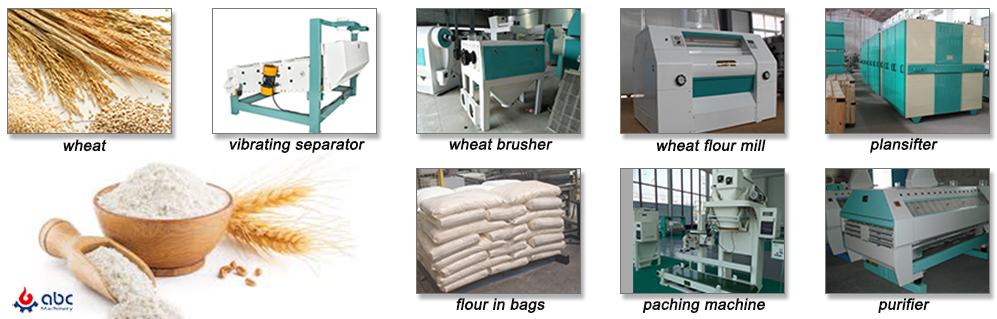
Wheat Flour Processing Line Flow Chart
1. Raw Material and Capacity Matching
According to Nigeria’s Ministry of Agriculture and FAO data, local wheat production is around 1.2–1.4 million tons per year, concentrated in northern Kano and Katsina states and the central plateau region, accounting for about 70% of domestic output. As local supply is insufficient to meet domestic consumption, flour mills must align capacity with annual market demand and import plans.
-
30–50TPD wheat processing in Nigeria: Suitable for single-state markets or small-to-medium Nigeria flour mill, requiring approximately 12,000–18,000 tons of wheat annually (based on 300 operating days). Capacity utilization can reach 85%–90%, offering flexibility for regional demand fluctuations with a relatively low investment threshold.
-
50–100TPD wheat processing in Nigeria: Suitable for multi-state coverage or core city surrounding markets, requiring approximately 18,000–36,000 tons of wheat annually. This supports high-frequency supply to baking, noodle, and convenience food enterprises, with flour mill production line utilization targets of 88%–92%, ideal for investors with sufficient capital and local resources.
2. Process and Production Line Design
Nigeria’s flour market demands product stability and versatility. Baking, noodle, and convenience food sectors require strict standards for protein content, water absorption, and particle size consistency:
-
Employing a 3–5 stage process of "cleaning → grinding → sifting → purification," equipped with multi-stage vibrating screens and airflow classification systems. Accurate roller pressure and sieve control can achieve 72%–78% flour yield, with raw material loss below 4%, ensuring high material utilization.
-
Unit energy consumption for wheat machinery is controlled at 8–12 kWh/ton of flour, with backup generators for unstable local electricity. A simple PLC control system reduces operational complexity, with 8–12 operators for 30TPD lines and 15–20 operators for 50–100TPD lines.
-
ABC Machinery provides a complete flour milling machine solution, covering cleaning systems, crushers, sifting systems, and packaging systems, supporting customized flour mill layout and future expansion.
3. Investment Cost and Budget Reference
Considering wheat flour equipment cost, installation, plant construction/rent, licensing, and initial operation, 30–100TPD small flour mills have the following reference budget (USD, for guidance only):
|
Capacity Range |
Reference Investment (USD) |
Cost Includes |
Additional Operating Costs |
|---|---|---|---|
|
30TPD |
150,000–250,000 |
Equipment, installation, 1-year plant, licenses, 1-month raw materials |
Raw materials, labor, energy |
|
50–100TPD |
300,000–900,000 |
Equipment, installation, plant, licenses, initial raw materials |
Shipping, labor, storage |
4. Layout and Efficiency Optimization
According to international standards (FAO, CIMMYT), a well-designed flour mill design layout or wheat flour mill plant layout can improve overall production line efficiency by 10%–15%, reduce energy consumption by 5%–8%, and lower labor requirements by 10%–12%.
-
Modular production line design allows future expansion and multi-product production, responding flexibly to market changes.
-
Raw material transportation to the flour mill machine should be within 10–15 meters to reduce conveying loss by ~2%.
-
Finished flour packaging path to the warehouse should be 15–20 meters, saving 1–2 workers per shift and reducing logistics energy consumption by ~5%.
-
ABC Machinery provides EPC turnkey services covering equipment selection, flour mill plant layout, installation, commissioning, operation & maintenance, and technical training. Data-driven monitoring and process optimization can reduce comprehensive production costs by 8%–12% and shorten ROI by 0.5–1 year.
-
Additional options include wheat mill machine, or cost of flour mill machine analysis to optimize investment planning.
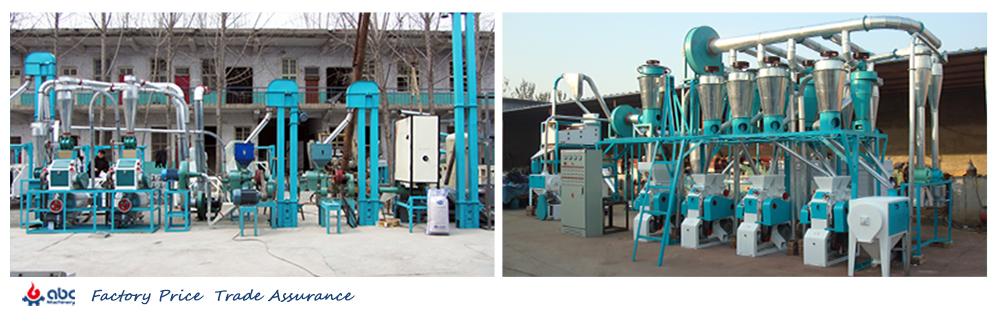
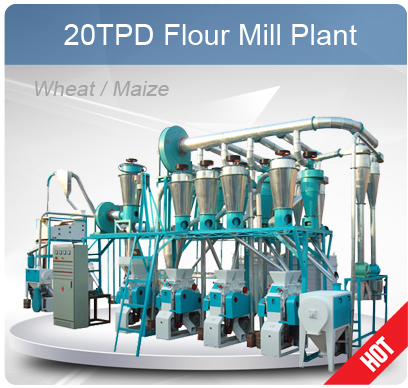
Factory Price Wheat Flour Processing Plant
Choosing the Best Flour Mill Equipment Supplier
When investing in a wheat processing plant in Nigeria, selecting a supplier with technical expertise, local service, and international project experience is critical. ABC Machinery has successfully delivered multiple flour mill plant projects worldwide, including Nigeria, Kenya, South Africa, Zambia, India, Indonesia, Philippines, Chile, Brazil, Peru, Saudi Arabia, UAE, and Egypt, with capacities ranging from 1–500+TPD. As a professional partner for Nigeria flour mill, ABC Machinery offers customized equipment solutions, flour mill plant cost consultation, and expert guidance to help investors achieve efficient, stable production and profitable returns.
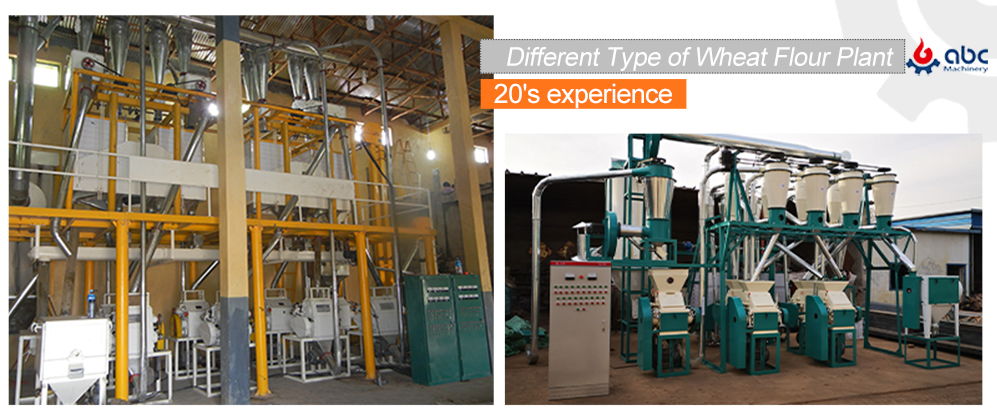
Successful Wheat Flour Plant for Sale
For tailored wheat flour processing equipment solutions, flour making machine configuration, or consultation on cost of flour mill, contact ABC Machinery now to get a customized plant plan and quotation.

Projects