 Build Your Future!
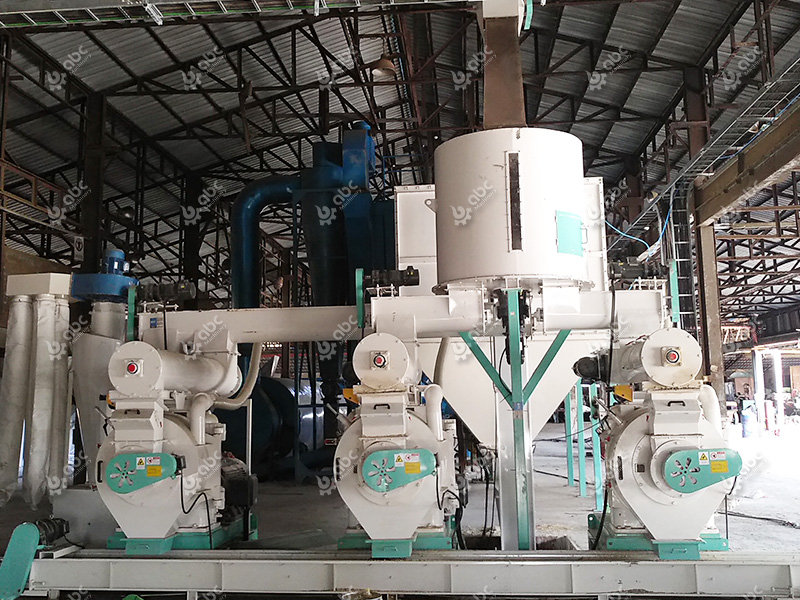
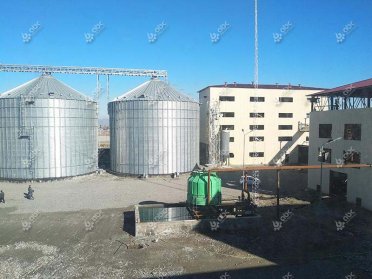
The 138th Canton Fair held its Phase 1 in Guangzhou from 15 to 19 October 2025, and ABC Machinery received overseas buyers at booth 18.2B42 in the General Machinery and Mechanical Basic Parts section. A roller mill floor and a 30 t/h pellet plant cannot be moved into a trade hall, so the booth carried the lines as process panels, physical wear parts and plant layouts.
138th Canton Fair 2025: Dates, Buyer Numbers and Phase 1 Scope
The 138th Canton Fair ran from 15 October to 4 November 2025. Phase 1, the industrial phase, closed on 19 October with 157,946 overseas buyers from 222 countries and regions, 6.3% up on the previous session, across 520,000 m² and more than 25,000 booths. The full fair closed with over 310,000 buyers from 223 countries, 7.5% above the previous session.
|
Metric |
Phase 1 (15–19 Oct 2025) |
Full 138th Fair (15 Oct – 4 Nov 2025) |
|---|---|---|
|
Theme / scope |
Advanced Manufacturing |
Three phases: advanced manufacturing; consumer goods, gifts and home decor; textiles, footwear, food and health products |
|
Exhibition area / booths |
520,000 m²; more than 25,000 booths |
Not stated in the Phase 1 release |
|
Overseas buyers |
157,946 |
More than 310,000 |
|
Countries and regions |
222 |
223 |
|
Growth over previous session |
6.3% |
7.5% |
|
On-site intended export deals |
Not stated in the Phase 1 release |
USD 25.65 billion |
Sources: Canton Fair organizers, Phase 1 closing figures reported by Xinhua on 20 October 2025; full-fair figures reported by China Daily on 5 November 2025.
Phase 1 is the industrial phase: the exhibitors in hall 18 build machinery and components, and the buyers walking it source production equipment rather than consumer goods. Background on the two divisions behind the stand — GEMCO for biomass, KMEC for grain — sits on the about page.

Booth 18.2B42: Five Processing Lines in One Booth
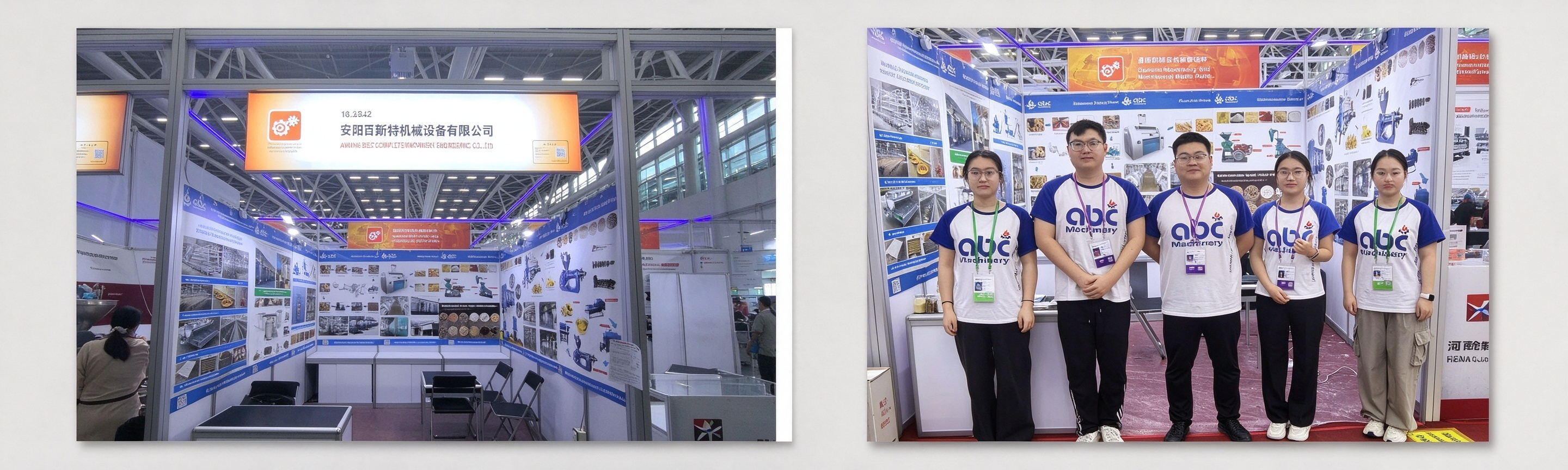
A standard shell-scheme booth holds no roller mill and no pellet press, so the display was built from four walls of printed process panels, two consulting desks and a set of physical parts. Each panel pairs a flow chart with photographs of a delivered plant, so the drawing can be checked against an installation.
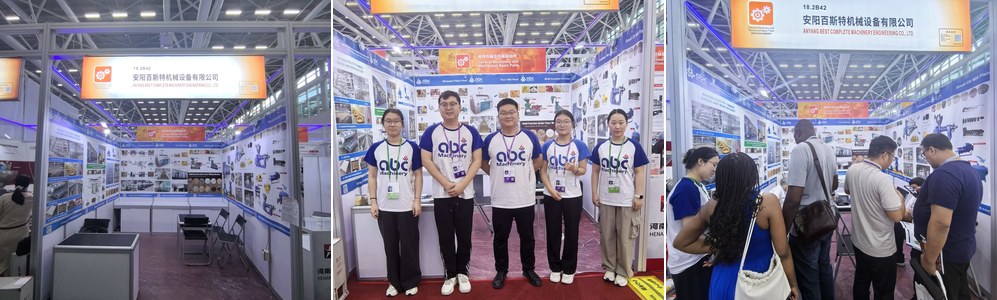
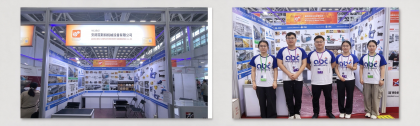
Left to right — the booth before opening, under the hall banner reading General Machinery and Mechanical Basic Parts; the team; visitors at the counter.
Finished products travelled better than machines: jars of wood pellets, feed pellets and grain samples sat on the desk next to the dies that produced them. The wear parts were real too — ring dies, roller shells, hammers and screens could be lifted and measured, which suits a hall whose banner names mechanical basic parts.
What Each Line Covers: Flour, Feed, Biomass, Oil, Fertilizer
The booth covered five plant families, each with its own flow chart, capacity band and finished-product reference: grain and flour milling from 10 T/D to 1,000 T/D, animal feed pelleting at small and large scale, biomass pelleting from 500 kg/h to 30 t/h plus briquetting at 200 kg/h to 5 t/h, oil pressing and refining from 10 TPD to 5,000 TPD, and organic fertilizer production.
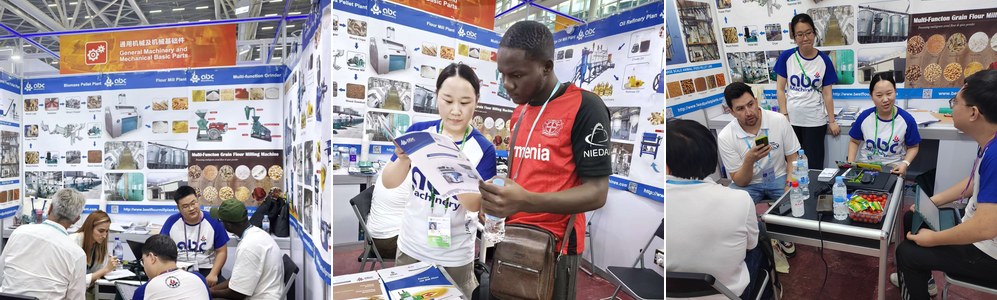
Flour and Grain Milling: 10 T/D to 1,000 T/D
One panel lists a single line handling sorghum, wheat, brown rice, white rice, chickpea, barley, soybean and maize, with a spice-grinding variant. Configuration is rebuilt at each capacity step: a 20 TPD line and a 200 TPD line follow the same sequence but share almost no equipment specification. Cleaning and destoning come first, the roller mill grinds, the plansifter and purifier sort the stream, and bagging closes it. Machine lists sit on the flour milling page; the 160 TPD wheat plant in New Zealand is the reference project.
Animal Feed Pelleting: Small Line and Large Line
The small-scale line is a compact arrangement for farm or village production; the large line adds batching, grinding, mixing, conditioning, cooling, crumbling and bagging in a multi-floor steel structure. Pellet samples covered cattle, poultry, floating and sinking fish feed and pet food, because die specification and conditioner retention time differ for each. Specifications sit on the ring die pellet mill and feed processing pages.
Biomass Pellets: 500 kg/h to 30 t/h
The biomass panel carries the clearest flow: logs, debarker, chipper, wood chips, hammer mill, dryer, sawdust, pellet mill, pellets. The moisture band is narrower than most buyers expect — 12%–16% on the BPM42 and BPM508 presses, up to 13%–22% on the BPM510 for fibrous material, with particle size below 5 × 5 mm. Straw, rice husk and bagasse go to briquette presses, which tolerate a wider range; the pellet plant range covers 500 kg/h to 30 t/h.
Oil Pressing and Refining: 10 TPD to 5,000 TPD
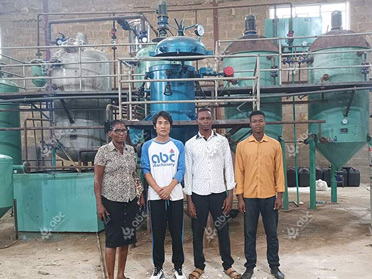
A small oil mill is a screw press sequence selling crude oil; the refinery side adds degumming, neutralization, bleaching and deodorization for a light, shelf-stable oil. Pretreatment — cleaning, cracking, flaking, cooking — sets what the press can extract and is the stage most often missing from a first budget. See the oil milling plant and oil refining plant pages.
Poultry Equipment and Organic Fertilizer: Manure as a Second Product
Poultry equipment — A-type and H-type cages, automatic pan feeding, rabbit cages — sits next to the organic fertilizer panel, and read together they describe a sequence: birds in cages, manure out of the house, then a composting, crushing, granulating, drying, screening and bagging line. Manure stops being a disposal cost and becomes a second product line. Installed examples are on the projects page.
Six inputs fix a quotation: material analysis, target capacity, product specification, site and power conditions, automation level, and delivery schedule. No price is quoted here — a 30 TPD wheat line and a 30 TPD maize line do not share a cost base.Sizing a line? Send the material and its moisture, the target output in TPD or t/h, and the site voltage and frequency. The reply is a process flow and equipment list, not a brochure.
Ring Die Pellet Press Selection: Capacity, Moisture and Die Specification
Presses listed on the site run from the 200–250 kg/h BPM25 at 22 kW to the 2,000–2,500 kg/h VMP630 at 132 kW. Capacity is the headline; the choice between two presses of similar output is decided by the die, the moisture band and the material.
|
Model |
Capacity |
Power |
Typical duty |
|---|---|---|---|
|
BPM25 |
200–250 kg/h |
22 + 0.75 + 0.37 kW |
Small wood and biomass line, 800 kg machine |
|
BPM35 |
500–700 kg/h |
30 × 2 + 0.75 + 0.75 kW |
Small to medium plant, 2,200 kg |
|
BPM508 |
1,500–2,000 kg/h |
110 + 1.5 + 1.2 kW |
Industrial line, material at 12%–16% moisture |
|
BPM510 |
Sawdust 1,500–2,000 kg/h; palm fibre 2,000–3,000 kg/h |
90 kW |
Fibrous material, moisture up to 22% |
|
VMP630 |
2,000–2,500 kg/h |
132 kW |
Vertical die, three-roller, 5,600 kg |
Figures as published on the ring die pellet mill page; final capacity is confirmed against the buyer's material.
Two presses with the same tonnage on the datasheet can behave differently on the same sawdust. Softwood at 13% moisture runs easily; rice husk at the same moisture abrades the die and produces a crumbly pellet unless the compression ratio changes. On the BPM42 the die measures Ø420 mm inside, Ø580 mm outside, and effective wall thickness divided by hole diameter gives that ratio. Hole diameter typically runs 2 mm to 12 mm and sets both output and pellet durability.
After the Fair: Layout, Equipment List and Factory Visit
The booth closed on 19 October 2025 and was dismantled; the follow-up did not close with it. Layouts, equipment lists and project references are issued through the same process whether or not the buyer attended, following the sequence on the services page: evaluation and design, manufacturing with in-works trial assembly, shipment, then installation and commissioning.
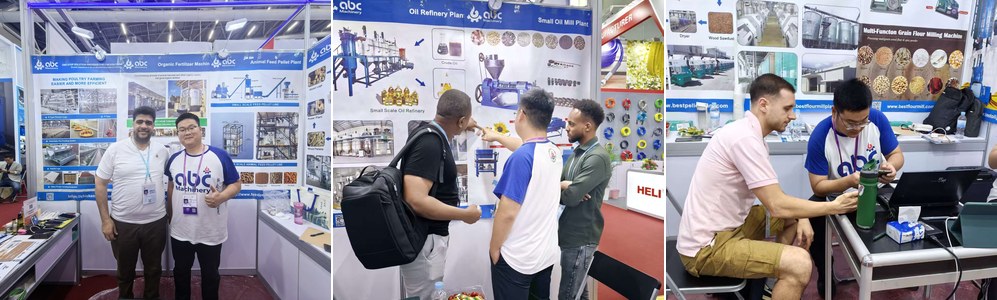
Factory visits in Anyang can be arranged, and a video walkthrough of a running line is available before a visit is committed. The 137th Canton Fair recap covers the previous session.Media representatives and buyers who want the process charts, project references or a layout for a specific capacity can contact the team.
- When was the 138th Canton Fair held?
- The 138th Canton Fair ran from 15 October to 4 November 2025 in Guangzhou, in three phases. Phase 1, for industrial machinery, ran from 15 to 19 October 2025 and drew 157,946 overseas buyers from 222 countries and regions.
- Where was the ABC Machinery booth?
- Booth 18.2B42, hall 18.2, in the General Machinery and Mechanical Basic Parts section of Phase 1.
- What did ABC Machinery display at the fair?
- Five plant families: grain and flour milling 10 T/D to 1,000 T/D, animal feed pelleting at two scales, biomass pelleting 500 kg/h to 30 t/h plus briquetting, oil pressing and refining 10 TPD to 5,000 TPD, and organic fertilizer production. Ring dies, roller shells, hammers and screens were shown as samples.
- Can buyers still request a quotation after the fair?
- Yes. Send the raw material, the intended capacity and the site power conditions, and a process design and equipment list can be prepared.
- What capacities can ABC Machinery supply?
- 10 T/D to 1,000 T/D for grain milling, 500 kg/h to 30 t/h for biomass pellets, 200 kg/h to 5 t/h for briquetting, and 10 TPD to 5,000 TPD for oil milling and refining. Final capacity follows a raw material test.

- 1 ton/h Mini Feed Mill Plant
- 2TPH Poultry Feed Manufacturing Plant in Uganda
- 2 ton/h Livestock Feed Production Equipment Line
- How to choose Right Animal Feed Making Machines?
- 16 Practical Tips for Cattle Feed Formulation
- How Much Will Cost to Setup a Poultry Feed Mill?