 Build Your Future!
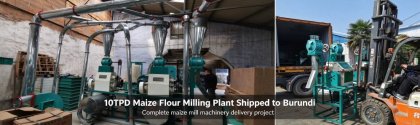
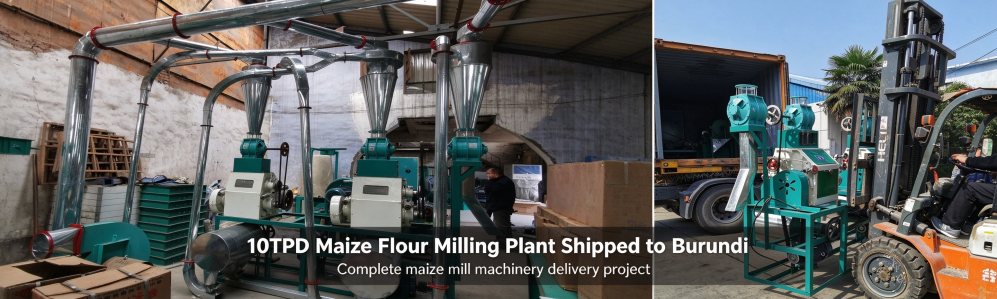
Maize is the staple grain for most households in Burund.ABC Machinery has completed the manufacture, factory testing and container loading of a 10 t/day maize flour milling plant for a buyer in Burundi. The set was built as a complete six-stage line - cleaning, husking, breaking, roller milling, sifting and bagging - assembled and trial-run on maize in our workshop, then export packed and loaded. Because Burundi is landlocked, that container has a sea leg and then a road leg ahead of it, and the loading sequence was planned around both.
Project Background: Maize Milling Demand in Burundi
Burundi's national maize crop runs in the order of 590,000 t a year. Agriculture accounts for more than 30% of GDP and employs over 85% of the working population, and maize is eaten as flour rather than as grain - which puts milling directly on the household food chain, not at the edge of it.
The gap in this market is not volume. It is quality. Hammer-milled flour carries the bran and the germ, so it is darker, higher in fibre and noticeably shorter-lived: the germ holds about 75% of the kernel's oil, and that oil is what turns rancid.
|
Parameter Index |
Details of the 10TPD Burundi Project |
Industrial Competitive Advantages |
|---|---|---|
|
Daily Processing Capacity |
Continuous processing of 10,000 kg (10 t) of raw maize within 24 hours |
Sized for a single container and a single operator team, with output beyond own use available for local sale |
|
Raw Material |
Maize, milled on the buyer's own local grain |
Roll and screen settings tuned at trial-run stage to the buyer's grain, not to a generic sample |
|
Process Stages |
6 - cleaning, husking (decortication), breaking, roller milling, sifting, bagging |
Endosperm, bran and germ are separated as completely as the process allows, which is what hammer milling cannot do |
|
Finished Products |
Maize meal and maize flour, with bran and germ leaving as separate co-product streams |
Bran and germ are not waste: germ goes to oil recovery, bran and spent germ meal go to animal feed |
|
Inter-Stage Conveying |
Pneumatic conveying in stainless pipework, with cyclones for air separation |
Pipework can turn and rise where a bucket elevator cannot; less spillage and less dust in the plant |
|
Machine Drives |
Individual motor and V-belt drive per machine |
A single machine can be serviced or re-belted while the rest of the line keeps running |
|
Bagging Section |
Manual bagging station |
Avoids the cost of an automatic weigher-sealer while the plant proves its market; bag sizes change without tooling changes |
|
Delivery Stage |
Factory assembled, trial-run, export packed and container loaded |
A landlocked destination cannot resolve a missing bracket locally, so nothing is left to be found out at the far end |
Planning a maize flour milling plant of your own? Send us your raw material and the product grades you want to sell, and our engineers will return a process flow and equipment list for your capacity - free of charge.

How the 10TPD Maize Flour Milling Line Is Configured
The core of a maize flour line is separation. Endosperm, bran and germ have to come apart cleanly and early, because everything downstream - flour colour, ash content, fat content, shelf life - follows from how well those three fractions were divided.
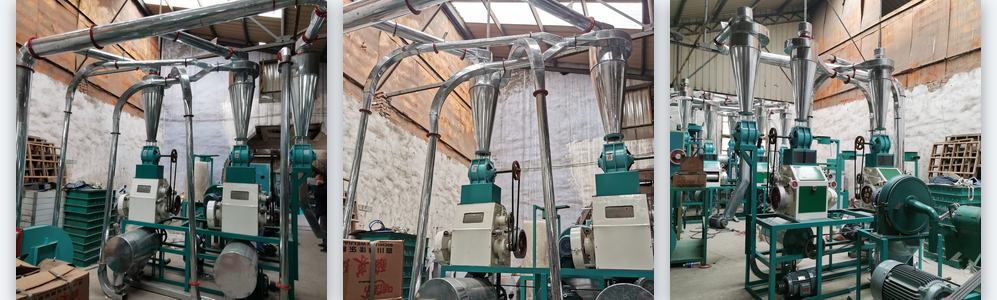
The line assembled and wired in the workshop - mills beneath the cyclones, stainless pneumatic conveying overhead
Cleaning and Destoning Before Grain Reaches the Mill
Maize bought in from farms arrives with sand, straw, cob fragments and stones mixed through it. This line cleans in three passes before any grain reaches the rolls:
-
Screening removes oversized material - cob fragments, straw and broken kernels - that would otherwise block the spouts downstream;
-
A gravity stone separator takes out stones by density difference, protecting the roll surfaces. Stones are harder than chilled-cast rolls; one that gets through scores the fluting and shows up as uneven grinding on every later pass, until the roll is re-cut;
-
Aspiration lifts dust and light chaff out of the grain stream.
Sand that survives cleaning is the more expensive failure, because it ends up in the bag. That is a food-safety problem rather than a quality complaint.
Husking and Germ Removal - Where Shelf Life Is Decided
Husking strips the outer bran layer; the breaking stage that follows frees the germ from the endosperm. These two operations are what separate a six-stage maize line from a hammer mill, and they are the reason the flour keeps:
-
The germ accounts for roughly 10 to 12% of kernel weight but holds about 75% of the kernel's oil. Removing it removes the primary source of rancidity - published dry milling references are consistent that degermination substantially improves the shelf life of endosperm products;
-
The bran layer carries fibre and colour. Leaving it on darkens the flour and pushes ash content up;
-
Aflatoxin sits in the outer layers and in the germ, which is why dry decortication reduces it. In a published East African trial, decortication brought aflatoxin in maize down from a mean of 51.3 ppb to 9.6 ppb.
Two honest qualifications on that aflatoxin figure. First, this is a reduction and not an elimination: 9.6 ppb is far below the 51.3 ppb the grain started at, but it is not zero, and it remains close to the limits applied to cereal flours. Decortication is a control, not a cure. Second, the size of the effect depends on how the machine is set and on the grain - a decorticator run too gently leaves contaminated bran on the kernel and gains nothing.
Published dry milling practice conditions maize to 20 to 22% moisture and lets it rest for 10 to 30 minutes before decortication, because bran strips more cleanly from a moistened kernel than from a dry one. Whether a 10 t/day husking section needs that conditioning step depends on the maize and the target ash - which is a question worth putting to any supplier.
Roller Milling: Breaking and Reducing in Stages
Grinding on this line is staged rather than done in one pass. The first pair of rolls breaks whole kernels into coarse grits; the following passes reduce those grits progressively, with the material recirculating until it reaches the target particle size.
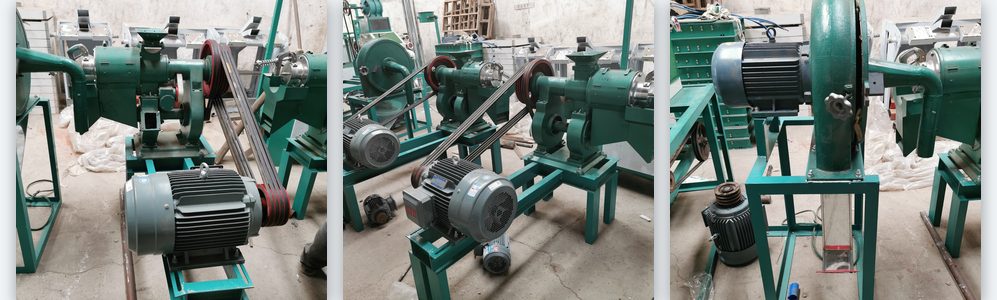
Individual machines on their own motor and V-belt drives, ready for export packing
-
Staged reduction generates less heat than single-pass impact crushing. Excess heat damages starch and protein structure, and it costs the buyer aroma and baking performance as well as yield;
-
Because the rolls only ever see material that has already been cleaned, husked and de-stoned, roll wear is driven by normal abrasion rather than by foreign objects.
Sifting: Turning One Ground Stream into Saleable Grades
A pass through a roller mill does not produce one uniform product. It produces a spread of particle sizes, and the sifting circuit is what sorts that spread into grades the market will pay for. Published dry milling reference data for maize gives the split below.
|
Product |
Particle size (mm) |
Yield (% by weight) |
|---|---|---|
|
Flaking grits |
5.8 - 3.4 |
12 |
|
Coarse grits |
2.0 - 1.4 |
15 |
|
Medium grits |
1.4 - 1.0 |
23 |
|
Fine grits |
1.0 - 0.65 |
23 |
|
Coarse meal |
0.65 - 0.3 |
10 |
|
Fine meal |
0.3 - 0.17 |
10 |
|
Flour |
below 0.17 |
5 |
Read that as a description of what a maize kernel can be cut into rather than as a promise about any one flour mill factory. In the reference split, half the kernel lands in the grits fractions and only 5% reaches the finest flour; a line built for meal and flour shifts that balance by closing roll gaps and changing screen mesh, so more of the kernel arrives in the meal and flour fractions instead of the grits. Oversize material retained on the screens recirculates back to the rolls, so nothing saleable is lost to the co-product streams by accident.
There is a second effect worth knowing before choosing how fine to go. Fat content rises as particle size falls: published figures put large germ-free grits below 0.5% fat, while the finest flour fraction reaches 1.5 to 2.5%. Finer flour therefore carries more of the oil that shortens shelf life - which in this market is a commercial decision, not only a technical one.
Pneumatic Conveying Between Stages
Material moves between stages on this line by air, through stainless pipework, and is separated from the air in cyclones.
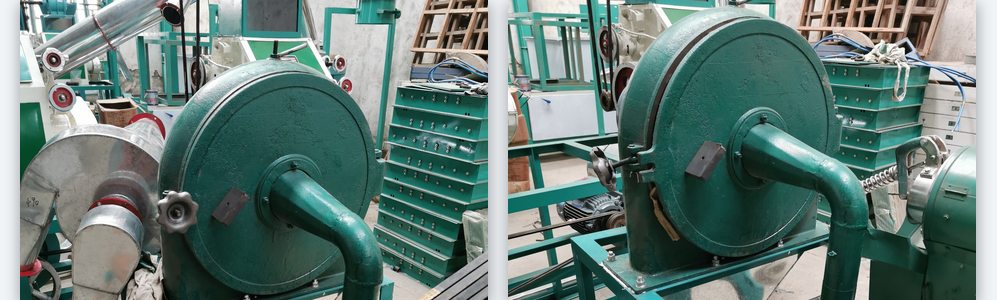
The centrifugal fans on the pneumatic conveying circuit, with stainless inlets and ductwork
Pneumatic conveying is the most power-hungry way to move material in a mill, and the trade-off is worth stating plainly rather than leaving in a specification sheet:
-
Published milling energy studies put conveying at roughly 30% of a mill's electrical load, and a comparison of conveying options at 10 t/h over a vertical lift of 20 m found pneumatic lifting drawing about six times the power of a mechanical alternative;
-
What that cost buys is routing: stainless pipework turns and rises in ways a bucket elevator cannot, which matters on a compact layout, and a sealed system puts less dust into the working area;
-
Stainless rather than painted carbon steel is a maintenance decision in humid conditions, and it is the part of the flour mill plant a food inspector will look at first.
Manual Bagging at 10 Tons per Day
Bagging on this line is done by hand, and that is a deliberate choice rather than an omission. At 10 t/day it removes the cost of an automatic weigher-sealer while the plant is still proving its market, and it lets the operator change bag sizes without changing tooling - a real advantage when the market for 1 kg retail packs and 50 kg trade bags is not yet settled. In throughput terms, 10 t/day is about 200 bags a day at 50 kg, or 10,000 packs a day at 1 kg, which is the figure to plan packing labour against.
From Factory Trial Run to Container Loading
What Was Verified Before Packing
The line was assembled and run in the workshop before it was packed, and on an inland destination that is not a formality. A missing bracket or a mis-drilled flange cannot be resolved at the far end of a route that ends two weeks' drive from a port. The trial run confirmed that drives turn in the right direction, that clearances hold with the flour mill machines sitting in their shipping frames, and that the spouting and conveying circuit is complete - and it surfaced the small missing parts that would otherwise become a delay measured in weeks.
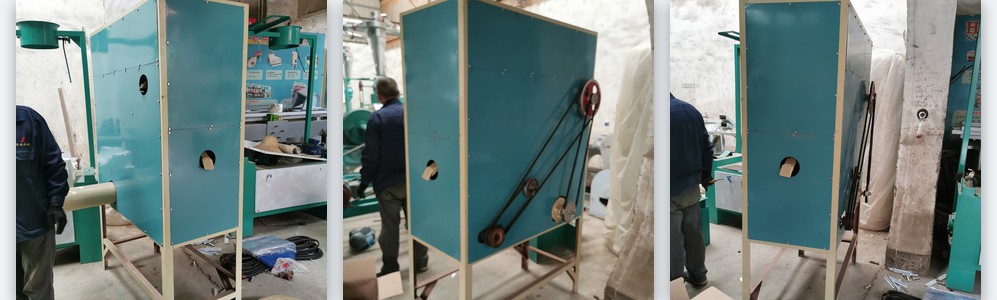
Line equipment on the assembly racks in the workshop before export packing
The Loading Sequence for an Inland Destination
Burundi's cargo normally enters through Dar es Salaam in Tanzania, or along the Northern Corridor from Mombasa in Kenya, and then continues inland by road. Equipment therefore faces a sea leg inside a container and a road leg afterwards, often after customs clearance and transloading at the port. That shaped the loading plan in two ways: heavy items are positioned so they can be lifted with the flour milling equipment available at the destination end, and parts are grouped by the order in which they will be reassembled, so the installation team is not emptying the container to find the frame it needs first.
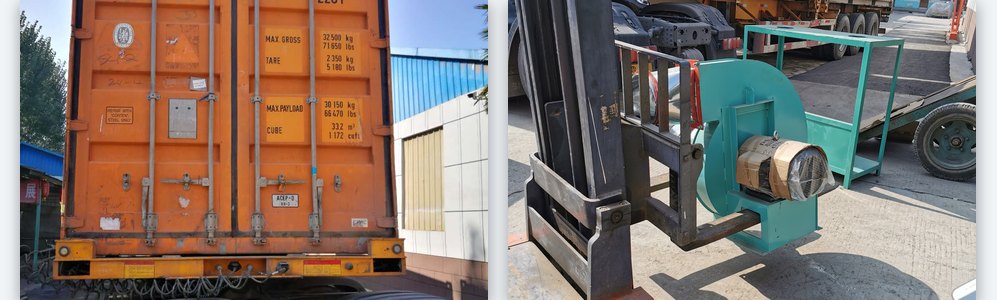
Container loading and sealing - the sea leg to Dar es Salaam, then the inland road to Burundi
Core Reasons African Investors Work with ABC Machinery
Building a maize flour milling plant in Africa is not a matter of ordering machines and waiting for them to arrive. The flour mill manufacturing line has to survive a long sea route and an inland road leg, be reassembled by a local team, and then run for years on local grain, local power and local operating habits. That is where a supplier's practical experience shows, and it is what this project drew on:
-
Machine bodies and frames are built for conditions that are harder than a European plant room - high ambient temperature, heavy dust and voltage that is not always stable. Where the duty is severe, drive and bearing selections are made with that in mind rather than to a mild-climate default.
-
The complete set is tested before shipment, and documentation is prepared so the equipment can be registered and, where the buyer needs it, financed locally.
-
Installation and commissioning are supported on site by our engineers, and operators are trained on the actual line rather than from a manual - the trial run at our factory is also used to record the settings the line starts from.
-
Quick-wearing parts - rolls, screens, belts and bearings - are held so that a stopped plant does not become a stopped business.
-
Roll gaps, screen mesh and conveying settings are set to the buyer's own maize, because maize varies by variety, moisture and growing region, and a line tuned to a generic sample will not hold its grade on real grain.
-
Around the equipment, we work on the questions that decide whether a plant is viable: raw material assessment, workshop layout, product grades worth selling, and later capacity upgrades.
The launch of this 10 t/day maize flour milling plant gives one buyer in Burundi the ability to hold a consistent, long-life flour on the local staple food market, instead of selling whatever a hammer mill turns out that week. ABC Machinery manufactures complete maize and wheat milling sets and undertakes turnkey grain processing projects across Africa and Asia. Tell us your raw material, your target product grades and the capacity you need, and we will get back to you with a process design and equipment list for your situation.
- What does 10 t/day actually mean on a maize flour milling line?
- It refers to raw maize going into the line, not flour coming out. Everything the line removes - bran, germ and cleaning screenings - leaves as co-product, so the flour and meal yield is lower than the input weight. Ask for the yield by fraction, measured on your own grain, rather than a single output figure.
- Is husking necessary if the maize is already clean?
- Yes, and for a different reason than cleaning. Cleaning removes stones, metal and dust. Husking removes the bran layer and the germ, which are the fractions that carry the oil, the colour and most of the aflatoxin risk. Grain can be perfectly clean and still have bran on it, so cleaning does not replace husking.
- Why does finer maize flour have a shorter shelf life?
- Because fat content rises as particle size falls. Published figures put large germ-free grits below 0.5% fat and the finest flour fraction at 1.5 to 2.5%, and fat is what turns rancid. If you intend to sell fine flour into a hot climate, shelf life has to be designed into the target grade rather than assumed.
- How is a maize milling plant shipped to a landlocked country?
- In containers, by sea to a port such as Dar es Salaam or Mombasa, then by road inland. Because the equipment is handled and transloaded more than once, the packing and the loading order matter as much as the machines, and the line should be assembled and trial-run at the factory before it is packed.

Projects