 Build Your Future!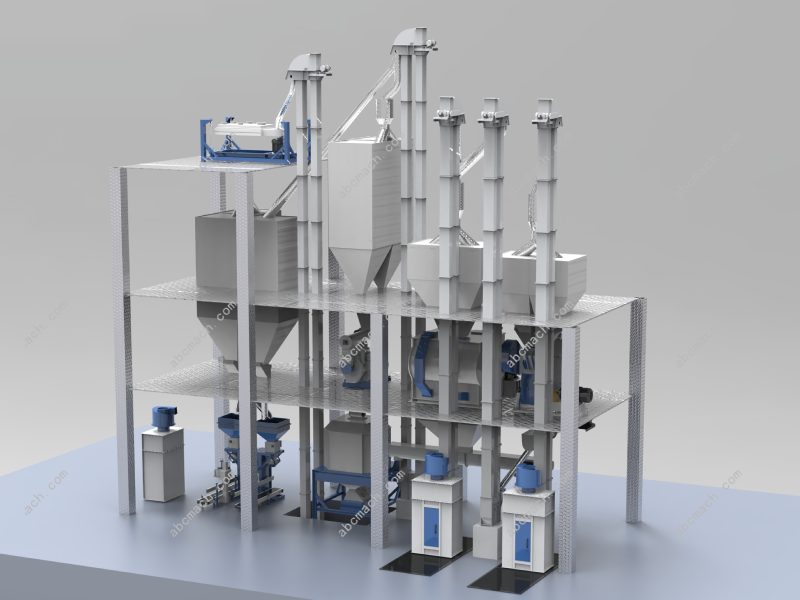
- Production Output: 1‑30 t/h standard, custom‑engineered up to 100 t/h for large‑scale integration projects
- Preferred Feed Form: durable whole pellets for grower‑finisher broilers; uniform 1‑2 mm crumble specially formulated for day‑old broiler chicks
- Raw Materials: corn, soybean meal, optional full‑fat soybean, DCP, soybean oil, compound premix
- Application: complete pelleted broiler feed covering starter, grower and finisher growing phases for meat‑type chicken production. Address core on‑site pain‑points including pellet fines, nutrient degradation and multi‑stage feed switching.
- Target User: broiler integrator complexes, commercial feed mills, large poultry producers and independent broiler raising operators
- Main Equipment Included: hammer mill, high‑uniformity batch mixer, BPM ring‑die pellet mill, crumbler unit, rotary sieve, double‑layer steam conditioner, pellet cooler, automatic bagging station
- Process Flow: Raw Material Grinding → Batching & Mixing → Steam Conditioning → Pelletizing → (Crumbling & Sifting) → Pellet Cooling → Automatic Bagging
- Quality system: ISO 9001 certified manufacturing; CE‑compliant mechanical design for global export requirements
- Service scope: full broiler feed mill turnkey package: layout engineering, equipment fabrication, on‑site installation, commissioning and hands‑on operator training
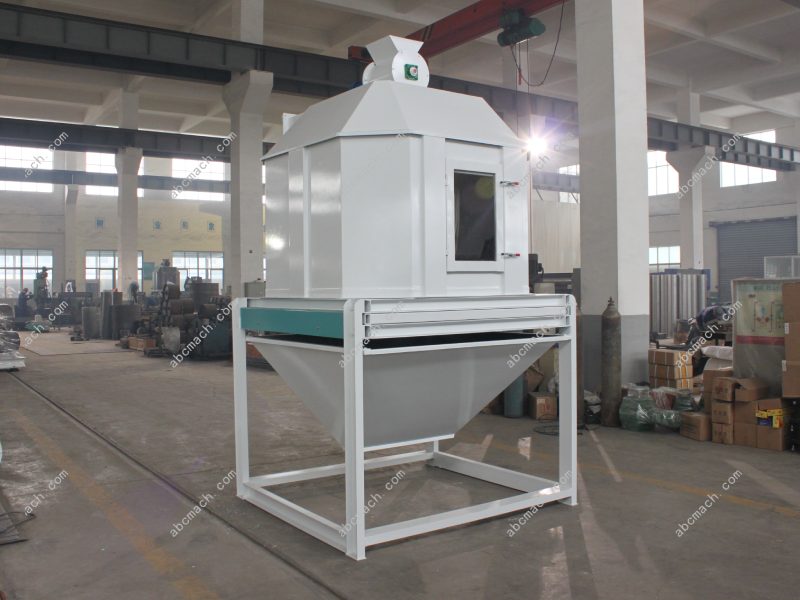
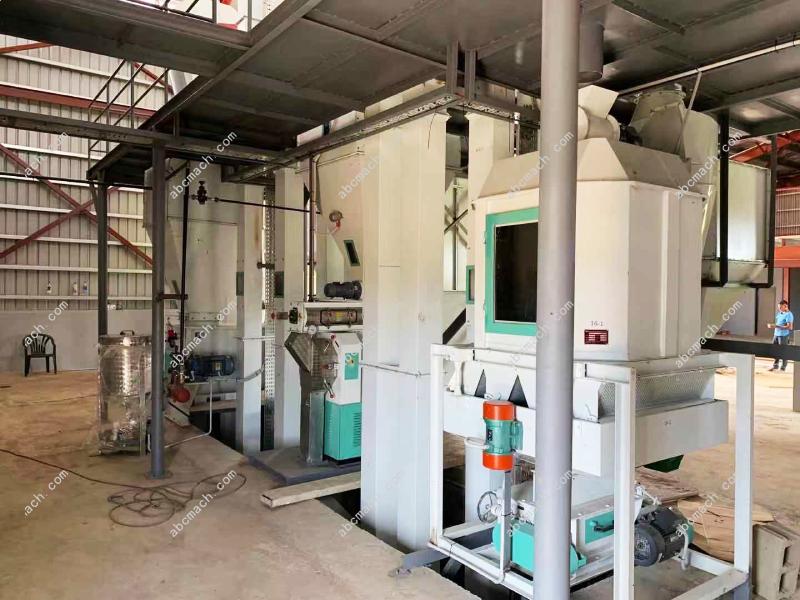
A broiler feed manufacturing line is designed to produce nutritionally balanced and physically uniform feed for broilers from the starter stage through grower and finisher phases. Unlike layer feed production, where mash feed can be a major product form, broiler feed manufacturing is generally centered on crumble and pellet production. The feed form, particle size, pellet durability, conditioning process and final moisture all need to match the rapid growth of broiler chickens.
ABC Machinery provides complete broiler feed production solutions from small farm-scale systems to commercial feed mills. Standard capacity ranges from 1–30 t/h, with larger multi-line plants available according to production requirements. The equipment configuration can be designed around your broiler genetics, feeding program, raw materials, target output and plant conditions.
Broiler Feed Manufacturing Process
A typical broiler feed manufacturing process can be arranged as:
Raw Material Receiving → Cleaning → Grinding → Batching → Mixing → Conditioning → Pelletizing → Crumbling & Screening → Cooling → Bagging
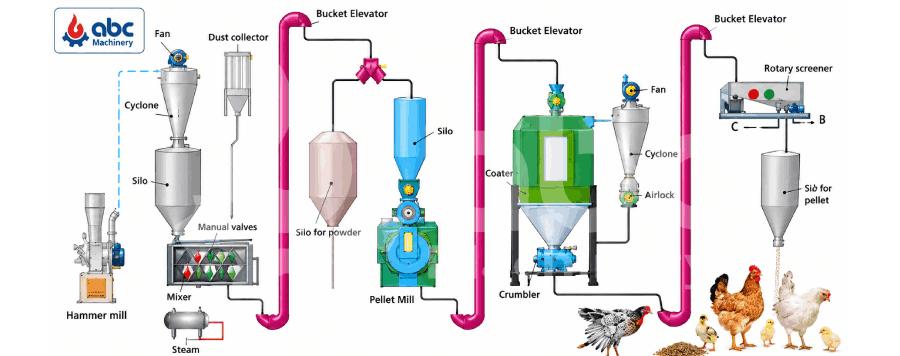
Broiler Feed Process Flow Chart
1. Fine Grinding
Grinding reduces corn, soybean meal and other ingredients to a particle size suitable for mixing and pelleting. For the broiler feed configurations described by ABC Machinery, grinding is generally controlled around 2.5–4 mm, with the actual target adjusted according to the formulation and required pellet characteristics.
Particle size is particularly important because excessively coarse material can make durable pellets more difficult to produce, while excessive fines can affect feed intake and physical feed quality. Aviagen also recommends minimizing very fine particles in finished broiler feed.
2. Accurate Batching and Mixing
After grinding, major ingredients are accurately batched and mixed with protein sources, minerals, oil and premixes. A high-uniformity batch mixer is important because the nutrient concentration of broiler diets changes between starter, grower and finisher formulas.
Oil can also be incorporated into the feed to increase dietary energy density. The mixing system needs to distribute added oil without creating lumps or uneven concentrations.
3. Steam Conditioning
Conditioning prepares the mixed mash for pelletizing by adding heat and moisture before it enters the pellet mill. The broiler feed configuration uses a double-layer conditioner at approximately 78–84°C, with controlled steam and sufficient retention time.
Proper conditioning can improve pellet durability, throughput and feed processing efficiency. However, conditioning needs to be controlled rather than simply increasing temperature. Excessive heat can negatively affect some nutrients and feed additives, while insufficient conditioning can result in weak pellets and excessive fines.
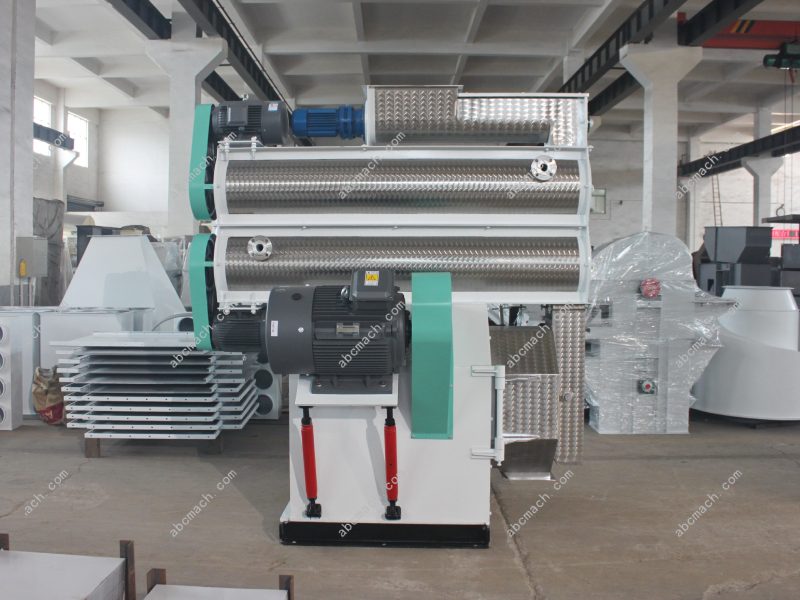
4. Ring Die Pelletizing
The conditioned mash enters the ring die pellet mill, where pressure and friction force the feed through the die holes. The die diameter is changed according to the production stage:
-
Starter: approximately 2.0–2.5 mm pellets before crumbling.
-
Grower: approximately 3.0–4.0 mm whole pellets.
-
Finisher: approximately 3.0–4.0 mm whole pellets.
Using different dies allows the same feed mill to produce different physical feed forms without requiring separate complete production lines for each growth stage.
5. Crumbling and Screening
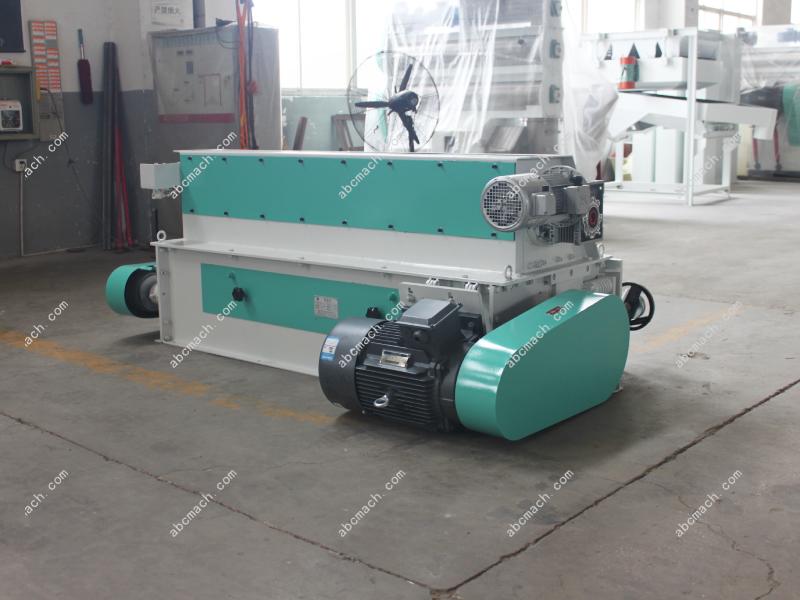
The crumbler and rotary screener are particularly important in a broiler feed plant because young chicks require a smaller feed form than older birds.
For starter feed, 2.0–2.5 mm pellets can be passed through the crumbler to produce smaller particles, generally around 1–2 mm crumble. The rotary screener then separates oversized particles and excessive fines so that the finished starter feed has a more uniform particle distribution.
This approach is more practical than producing extremely small pellets directly through the pellet mill, because very small die openings can reduce production capacity and increase die wear.
Aviagen's broiler management guidance also emphasizes controlling fines in crumble and pelleted feed. Its published particle-size guidance recommends keeping particles below 1 mm to a low proportion because excessive fines can negatively affect broiler performance.
6. Cooling and Final Moisture Control
Fresh pellets leave the pellet mill with elevated temperature and moisture. A counterflow or suitable feed cooler removes excess heat and moisture before the finished feed is screened and packed.
The target final moisture for the referenced broiler feed configuration is approximately 10.5–12.5%. Proper cooling is important for maintaining pellet durability during storage and transportation.
Main Equipment Configuration Scheme for Broiler Chicken Feed Production Line
The equipment required for a broiler feed manufacturing line depends on capacity and the number of feed products to be produced. A typical complete configuration includes the following machines:
|
Equipment |
Main Function |
|---|---|
|
Hammer Mill |
Reduce raw materials to a suitable particle size |
|
Batching System |
Accurately dose corn, soybean meal, minerals and other ingredients |
|
Batch Mixer |
Produce a uniform nutrient mixture |
|
Double-Layer Conditioner |
Add controlled heat and moisture before pelletizing |
|
BPM Ring Die Pellet Mill |
Produce starter, grower and finisher pellets |
|
Crumbler |
Convert starter pellets into smaller crumble |
|
Rotary Screener |
Separate fines and oversized particles |
|
Feed Cooler |
Reduce pellet temperature and moisture |
|
Bagging Machine |
Weigh and pack finished broiler feed |
Broiler Feed Formulation by Growth Stage
Broiler diets normally change as birds grow. The starter diet places greater emphasis on protein and amino acid supply, while grower and finisher diets progressively increase energy density and reduce crude protein concentration. The following table represents the formulation range provided for this broiler feed line and should be adjusted by a nutritionist according to genetics, raw material quality and local feeding conditions.
| Ingredient / Target | Starter | Grower | Finisher |
|---|---|---|---|
| Corn | 50–55% | 58–62% | 60–65% |
| Soybean Meal | 28–32% | 22–26% | 18–22% |
| DCP | 1.6–1.8% | 1.4–1.5% | 1.2–1.4% |
| Metabolizable Energy | 2,950–3,050 kcal/kg | 3,000–3,100 kcal/kg | 3,100–3,150 kcal/kg |
| Crude Protein | 21–23% | 19–21% | 18–19% |
| Lysine | 1.20–1.35% | 1.10–1.20% | 1.00–1.10% |
| Calcium | 0.90–1.00% | 0.85–0.95% | 0.80–0.90% |
The exact nutrient specification should not be treated as a universal formula. Current breeder recommendations can vary by genetics and production target. For example, Cobb's current broiler nutrition guidance uses separate starter, grower and multiple finisher specifications, with energy and amino-acid requirements changing progressively by age.
For full‑set technical datasheet and updated quotation, feel free to reach our sales department for detailed consultation.

Equipment Highlights for ABC Machinery's Broiler Feed Manufacturing Line
-
Integrated crumbler‑rotary sieve system — Single‑stream manufacture both chick crumble and market‑size grower‑finisher pellets. In‑line fines recycling cuts raw‑material waste and improves overall plant yield.
-
Precision‑controlled double‑layer steam conditioning — Optimized thermal treatment improves starch gelatinization for higher pellet hardness, meanwhile protecting heat‑sensitive amino‑acids from excessive thermal degradation.
-
Adjustable fine‑grinding workflow — Grinding parameters configurable according to local raw‑material characteristics, balance pellet binding performance and power consumption.
-
High‑tolerance oil‑addition mixing performance — Capable of 3‑4% oil addition without lumping. Well‑suited for regions adopting full‑fat soybean to reduce ingredient procurement cost.
-
Closed‑loop moisture monitoring after cooling — Keep finished pellets inside safe moisture window 10.5‑12.5%, suppress pellet breakage and mould risk in storage and cross‑region transportation.
Why Broiler Feed Is Mainly Produced as Crumbles and Pellets?
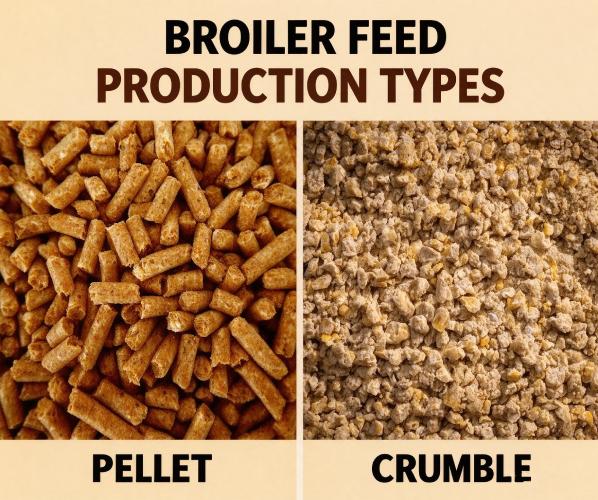
Broilers grow rapidly and have a high demand for energy and nutrients within a relatively short production cycle. Therefore, feed processing is not only about nutrient formulation; the physical form of the feed also affects intake, feed wastage and feed conversion.
Commercial broiler programs commonly use crumble or mini‑pellet feed during the early stage and larger pellets as birds grow. Aviagen, for example, recommends sieved crumble or mini‑pellets for young broilers and 3–4 mm pellets during the later grower and finisher stages.
-
Starter crumble for young chicks — smaller particles are easier for young birds to pick up and consume. The pellets can be produced first and then processed through a crumbler rather than using extremely small die holes throughout the production process.
-
3–4 mm pellets for older broilers — as birds become larger, whole pellets improve feed handling and allow the feed mill to produce a consistent product for grower and finisher diets.
-
Less segregation — pelleting binds ingredients together and reduces the tendency of particles to separate during transportation and feeding.
-
Lower feed wastage — properly produced pellets generally create less dust and fewer loose particles than poorly controlled mash feed.
Pelleting itself involves grinding and mixing the ingredients, steam conditioning the mash, and forcing the conditioned feed through a die. Research and industry guidance indicate that formulation and particle size have a major influence on pellet quality before the feed even reaches the conditioner.
Global Broiler Feed Line Cases & Practical On‑site Engineering Experience
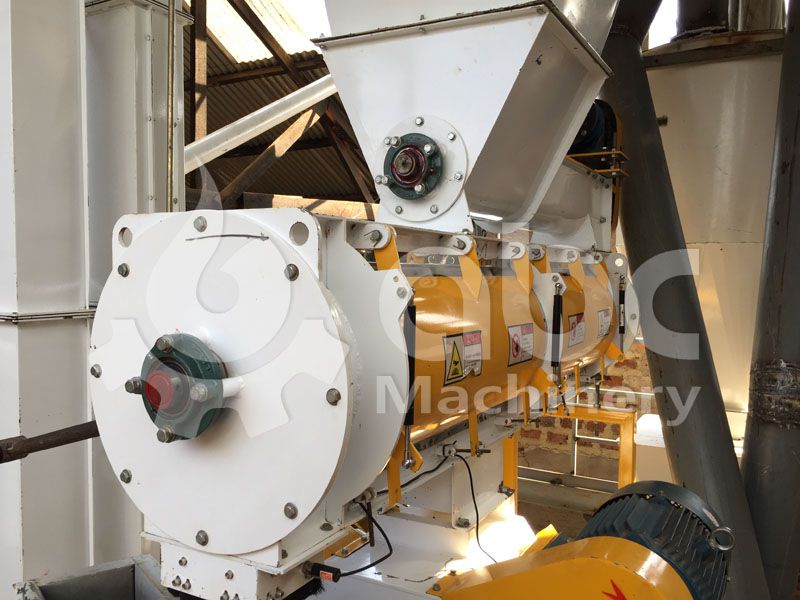
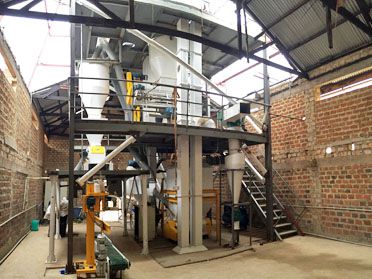
On‑site commissioning for small‑scale broiler feed production, supports multi‑raw‑material formula including corn, soybean meal and oil‑seed cake for local poultry farms.
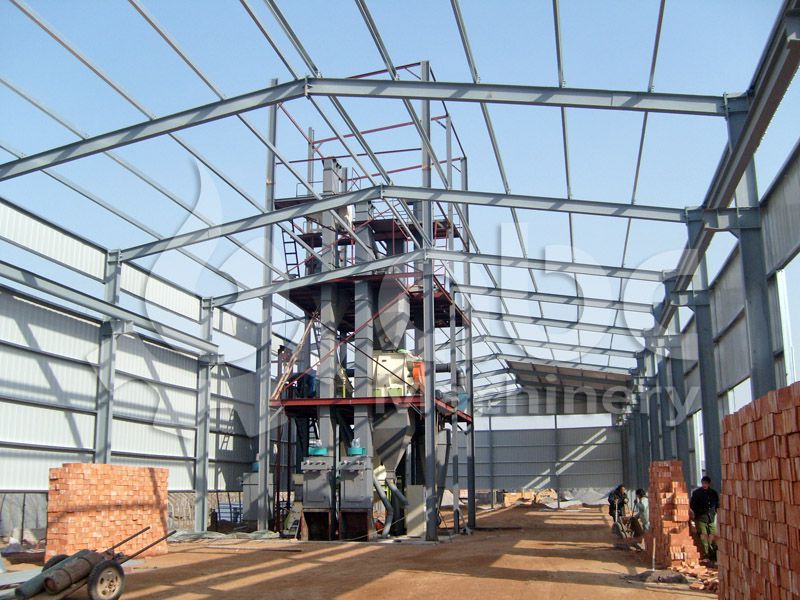
Large‑capacity automated feed processing workshop, continuous mass production of broiler starter, grower and finisher compound feed for regional feed distributors.
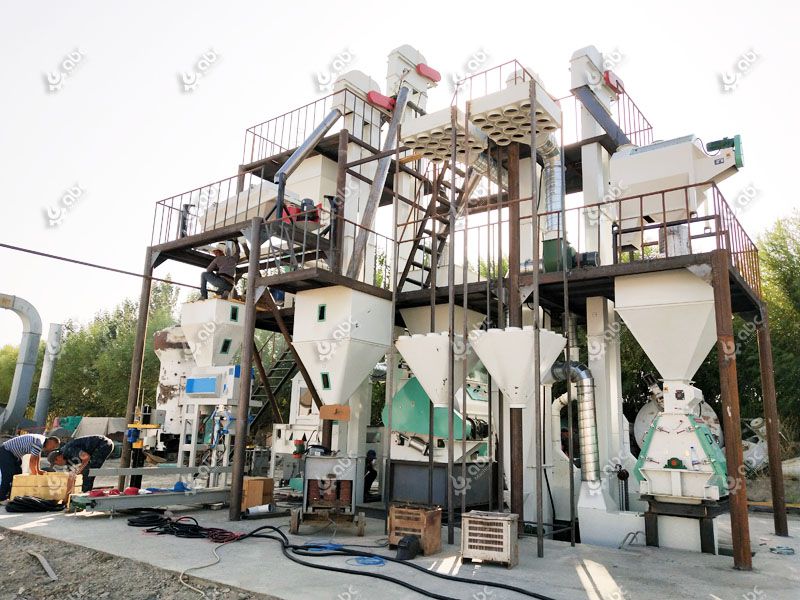
Modular turnkey feed mill solution, flexible switch between broiler crumble feed and full‑size pellets, adapted for local cottonseed and sunflower meal raw resources.
Get Custom‑Tailored Broiler Feed Line Proposal & Process Solution
To design well‑matched broiler feed production line and deliver precise poultry feed mill equipment budget estimate, please prepare the following key project information:
-
Broiler flock scale & market target — Total bird quantity, broiler breed and target slaughter weight for us to work out matched production capacity and equipment configuration.
-
Finished‑feed requirements — Confirm whether you require both starter crumble and grower‑finisher pellets, target hourly throughput and daily shift‑running arrangements.
-
Local commercial feed market price — Current market price of local broiler feed per ton, for self‑operated feed‑plant payback‑period calculation.
-
Local raw‑material resource conditions — Availability of full‑fat soybean or alternative local protein feed‑stuffs for formula adjustment and production‑cost reduction.
-
Workshop and power‑supply constraints — Workshop usable area, building height and installed power capacity for full feed‑mill layout planning.
Fill‑in and submit project details via our online inquiry form. Within one working‑day you will obtain professional broiler feed formulation guidance, itemized equipment list and accurate project‑budget quotation.