 Build Your Future!
A 20 t/d maize flour line whose EPC scope covers engineering, supply, erection and commissioning, producing flour about a month after the team arrived. What follows tracks the project from contract to first flour: how the scope is cut, how the flow is fixed, how the equipment ships, how it is erected and commissioned, which three figures acceptance rests on, and finally which market this tonnage fits. Owners comparing quotes or preparing a project can match each section against their own.
20 TPD Maize Flour Production Line: Project Overview and EPC Scope
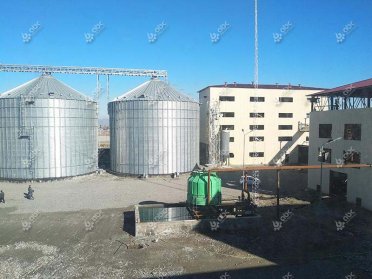
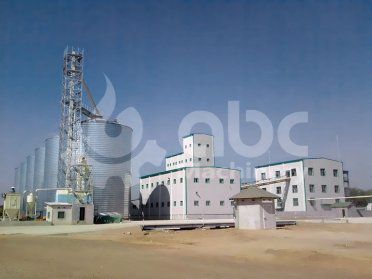
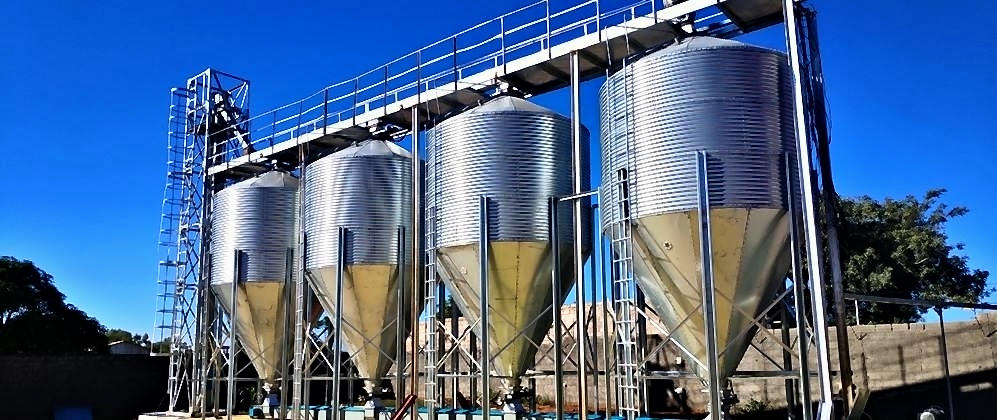
The line stands in Mozambique: four conical steel bins on a steel frame, a bucket elevator tower, five process sections and one central control cabinet. Maize is bought at harvest and stored on site; flour is bagged to local bag weight and sold locally. The figures are collected in the table below and not repeated later.
| Capacity | 20 t/d maize flour, 24 hours, single line | Raw material | Maize, local and imported batches |
| Storage | 4 conical steel bins on a steel frame, with elevator tower | Product | Maize flour, bagged to local bag weight |
| Process sections | Cleaning, degermination, milling, sifting, packing | Control | Central cabinet, section split with indicator lamps |
| Site | Existing building, new foundations and pits | Commissioning | About one month from arrival to first flour |
EPC is used loosely. It is neither a bundled equipment sale nor an installation supervisor on day rate — the difference is not in the label but in where the scope is cut. This project was cut into four deliverables, each with a defined start and a defined end, and each end is an acceptance point.
| Contract section | Deliverable | Ends when |
|---|---|---|
| Engineering | Flow calculation, equipment selection, layout drawing, floor loads and pit positions, utilities schedule | The civil contractor can build from the drawing and the owner can apply for the incoming supply |
| Supply | Main and auxiliary machines from intake to packing, steel structure and silo shells, ducting and cable trays, a one-year wear parts package | The site count at unpacking closes without shortage |
| Erection | Foundation verification, silo erection, machine setting, ducting, wiring | The dry run passes |
| Commissioning and handover | Load testing, parameter setting, operator training, acceptance record | Product is on spec and operators can start the line themselves |
The four belong in one contract because they depend on each other: the flow fixes the equipment list, the equipment list fixes foundation dimensions and transformer capacity, and once concrete is poured none of it can move. Bought separately, that dependency is coordinated by the owner. Written into one scope, it becomes an internal sequence for the supplier. With the scope settled, the first thing to lock down is the flow itself.
Four sections on paper are what make quotations comparable: at the same 20 t/d, a sectional quote and a lump sum are not the same offer.Tell us your target capacity and raw grain; the reply is an itemised line configuration, not a brochure. Click the button below to send your capacity and grain type.

Maize Flour Milling Process and Equipment Configuration
A 20 t/d line is not long, but every section answers the same question: what state must the stock reach before the next section can use it. Maize differs from wheat at the front end — the germ has to come out first, or the oil in it oxidises in storage. Five sections follow, in the order material moves.
1. Intake and Storage
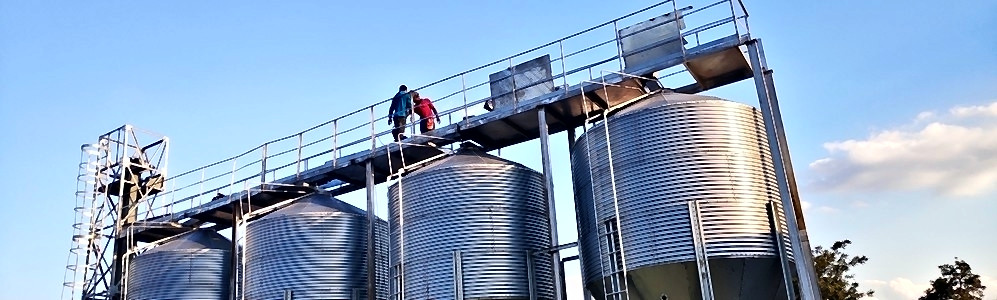
Four conical bins, linked to the elevator tower by a catwalk along the bin tops.
Silo capacity follows the intake pattern, not the daily output. Maize lands within a few weeks of harvest while the mill sells every month of the year, and the difference between the two is what the bins have to absorb. Conical bottoms discharge by gravity with nobody inside the bin, which removes the sweeper and the clean-out stop; what they demand is headroom, and a foundation designed for the full load — sized empty, the bins settle once filled and the spouts misalign. Cone angles are cut to the angle of repose in the factory, because site conditions do not allow the angle to be changed afterwards.
2. Cleaning and Degermination
The cleaning line runs vibrating sieve, gravity destoner, magnetic separator, scourer. Maize carries more stone than wheat, so the destoner is sized on the worst batch rather than the average, and origins with volatile impurity levels need pre-cleaning as a separate step. Skipping that step does not cost efficiency, it costs sieves: the machines clog within days, and running on while clogged damages the screens before anyone notices.
Degermination happens before milling, splitting germ from endosperm. Maize germ carries more than 20% oil; left in the flour it oxidises and shelf life drops from six months to two or three, less in a hot season. How far to separate is a product decision rather than a specification upgrade: bagged flour for long shelf life needs a high degermination rate, flour sold within days can run lower and trade extraction for cost. Neither section carries a photograph here, because neither shows up in one: their effect appears in the stability of everything behind them.
3. Milling and Sifting
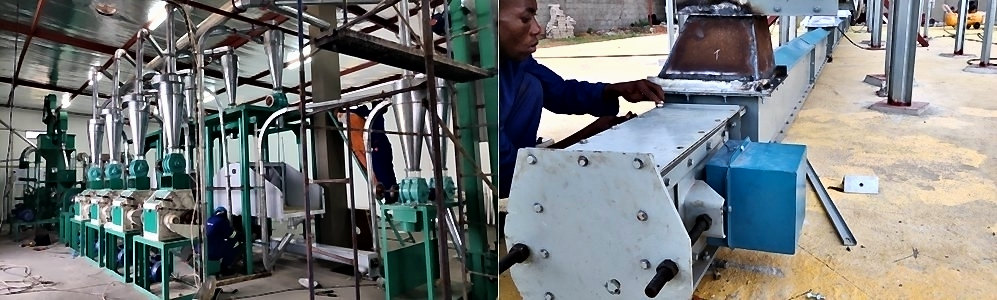
Left: roller mills in a row under the cyclones. Right: the spout and conveyor connection below the rolls.
Roller mills break the maize and then reduce it, with the work divided across passages rather than done in one pass. Roll length and speed ratio are set per passage, while the gap is trimmed on site against measured extraction and returns — a gap copied from another mill rarely holds, because grain hardness, moisture and roll wear all move. Ground stock goes to a square plansifter for grading, fine material to product and coarse material back to the rolls; the return load is the direct indicator of whether the flow is balanced.
4. Pneumatic Conveying
Conveying air does two jobs at once: it moves stock and it removes heat. Maize needs the second more than wheat — warm flour cakes, cakes block ducts, and one blocked duct stops everything behind it. Fans sized to peak output idle at low load, so air volume is balanced against actual throughput during commissioning rather than fixed on the drawing. This line runs on negative pressure, which makes joint sealing the direct determinant of dust in the mill — and the first thing to check on a walk-round.
5. Control and Load Commissioning
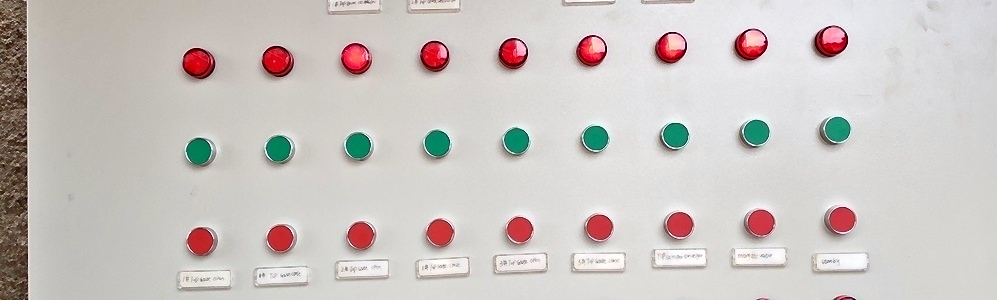
The indicator panel on the central cabinet, grouped by section.
The cabinet is split by section with indicator lamps rather than a full PLC, and that was deliberate: where the supply is not steady, operators need to see which section stopped without reading a screen. Simpler logic means faster fault location, at the cost of recipe management and remote diagnostics. Load commissioning then sets feed rate, air volume, sieve tension and bagging weight one by one, with the operators who will run the mill following the whole process. With the flow drawn and the equipment list fixed, the next question is how those machines travel from factory to site.
Flour Mill Making Equipment Shipping and Arrival Checks
A production line is not one consignment; it has to be broken down. There is one rule for doing it: pack in reverse installation order, unload in sequence. Steel goes up first on site, instruments are fitted last, so containers must open in that order — otherwise the site becomes a pile before it becomes a plant.
-
Steel and silo shells in sections. Wall panels, columns and ring beams are numbered by ring and assembled on site coil by coil. This cuts shipping volume and lets the frame be levelled before the bins go up.
-
Machines shipped whole. Roller mills, plansifters, destoners and bagging machines travel assembled; site work is setting and connecting, not rebuilding.
-
Electrical and pneumatic in separate crates. Cabinets, cable and pneumatic components are crated apart, with documents and drawings in the same crate for counting.
-
Wear parts with the line. Sieves, rolls, belts, bearings and pneumatic parts ship with the equipment rather than on a later order.
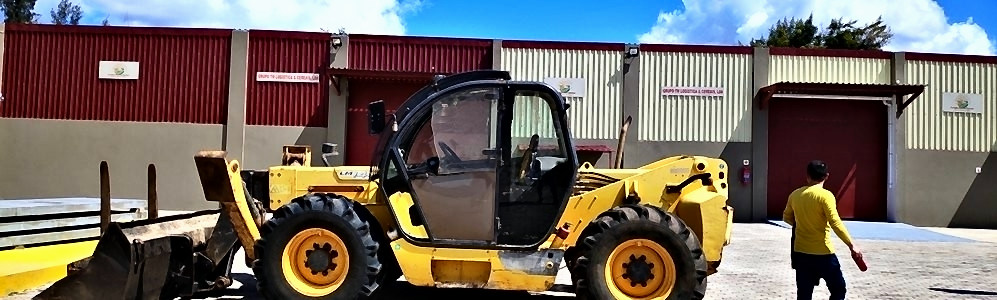
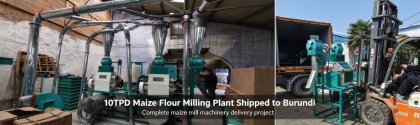
Equipment arriving: unloading by telehandler, then a box-by-box count against the packing list.
Shipment has to interlock with civil work. The weeks the equipment spends at sea are exactly the window for casting foundations, digging pits and raising steel; run in parallel and the schedule is two months, run in series and the same work takes four. That is one of the more concrete differences between EPC and buying machines — not which is cheaper, but who can put the whole schedule on one sheet. Arrival at port is the start, and the weeks on site decide whether the line runs to design.
The arrival count is the one step that can be traced back later: a shortage raised the same day costs a month less than one found mid-installation.Installation supervision, commissioning, operator training — ask what each scope covers. Click the button below to see the three scopes.
Maize Flour Mill Installation, Commissioning and Acceptance
Site work moves in five steps, each accepted before the next opens: foundations and pits, silos and tower, machines and ducting, wiring, load commissioning. Foundations take longest — anchor positions follow the machines, pits must leave passage for the elevator, conveyors and cabling, and concrete needs curing. Where drawings and site disagree, the rework costs more than any difference between machines, which is why the layout has to be final before the equipment ships.
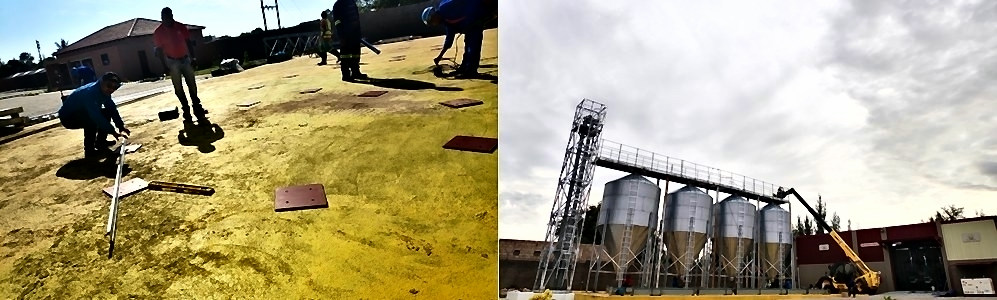
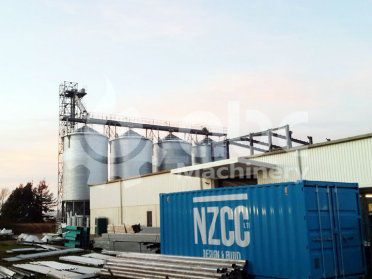
Left: set-out and levelling of anchor plates on the slab. Right: silos set by crane while containers are still being cleared.
Commissioning is not a dry run repeated. Feed rate climbs in steps, and each step is checked against extraction and return load; air volume is balanced to output rather than to the nameplate; sieve tension and bagging weight are set machine by machine. Judgement about when to stop can only be taught on a real fault, which is why training is not a separate visit: operators follow from dry run to the first bagged flour.
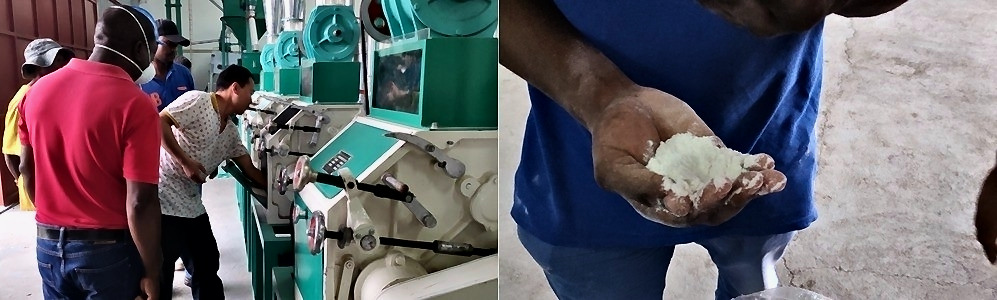
Left: operators checking feed and gap machine by machine. Right: sampling the flour, judged by hand and by fineness at once.
Acceptance is not a test that the machines turn. It is three figures that have to hold at the same time.
| Acceptance item | Pass condition | Basis |
|---|---|---|
| Output | Held at 20 t/d in continuous running | At the agreed product grade and grain condition |
| Product | Fineness and moisture inside the agreed band | Sampled in both hot and cool season |
| Power | kWh per tonne of flour inside the configured range | Matched to installed power on the equipment list |
When all three line up, handover happens, and the contractual obligations of a project are largely discharged.
20 TPD Maize Flour Mill: Which Market It Fits

The storage block from the yard: tower, catwalk and four bins, the group that sets the intake ceiling for the line.
Choosing this tonnage is really deciding whether five things can be matched in one pass. Take them one by one.
-
Tonnage follows sales, not
k bracket.
A specification sheet explains only part of what makes a maize line work. The interface list, the drawing date and spare availability are not on a nameplate.
Choosing an EPC Contractor for a Flour Mill
ABC Machinery delivers complete lines, so this section states two things only: what we hand over, and what an enquiry needs in order to move.
-
Flow design and layout drawing. Passage by passage, with machine positions, floor loads and pit locations marked for the civil contractor.
-
Equipment list and utilities schedule. Model, quantity, motor power, air consumption, transformer demand, so the incoming supply can be applied for early.
-
Sectional pricing. Storage and milling quoted as separate sections, owner-supplied items listed, boundaries written into the quotation rather than agreed verbally.
-
Erection supervision and load commissioning. Engineers on site through setting, connection and commissioning; operator training inside the commissioning window.
-
One-year spare parts package. Wear parts and pneumatic components shipped with the equipment, matched to the equipment list.
What we do not provide is worth stating too: a lump sum without a scope, or a delivery date without conditions. Both look convenient before signing and become the first point of dispute during execution.To move from this page to an executable proposal, four items are enough: daily output and shifts, grain condition (moisture, impurities, shelled or on the cob), site conditions (area, headroom, ground bearing), and power supply. Those four fix flow length, machine count and civil dimensions; everything else can be closed during the proposal stage.
Cost structure for similar tonnage in other markets is covered in maize milling cost in Uganda, the capacity-band logic in the four-band configuration article, and the general rules of scope and acceptance in flour mill project.The engineering team at ABC Machinery prices section by section, with the scope attached. Send capacity, grain type and project country in one message and the reply is an itemised configuration, not a brochure.

Projects