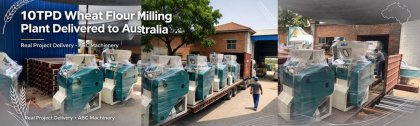
 Build Your Future!
Building a maize processing facility is a high-potential investment under maize milling in Uganda. In most cases, profit margins typically range from 15% to 40%, depending on raw material procurement efficiency, extraction rate (yield), processing technology, by-product utilization (bran, germ), and whether feed integration is included. Under the current market environment, the traditional single-product milling model is gradually evolving into a “multi-product synergy + value chain extension” model. Among these, the integrated model of maize processing + feed production has become the mainstream high-return pathway in maize milling in Uganda.

4 Core Profit Models of a Maize Processing Plant
A mature maize mill in Uganda does not rely solely on flour sales, but operates on a diversified revenue structure:
|
Revenue Stream |
Profit Share |
Optimization Direction |
|---|---|---|
|
Maize flour sales |
50%–70% |
Improve extraction rate (+3%–8%) |
|
By-products (bran/germ) |
15%–30% |
Connect to feed industry |
|
Toll milling services |
10%–20% |
Partner with traders/institutions |
|
Feed business extension |
High growth |
Extend industrial chain |
Key insight: By-products are not secondary—they act as a profit stabilizer and risk hedge tool in maize milling business in Uganda.
Investment Cost of Maize Milling Plant in Uganda (Reference)
Depending on capacity and automation level, the investment range of a maize mill plant is as follows:
|
Plant Scale |
Capacity |
Investment Budget |
|---|---|---|
|
Small-scale |
1–20 TPD |
$30,000–$80,000 |
|
Medium-scale (mainstream) |
20–100 TPD |
$80,000–$300,000 |
|
Large industrial |
100+ TPD |
$300,000+ |
Core conclusion: Project success is not determined by a single maize mill machine, but by the overall system design capability.
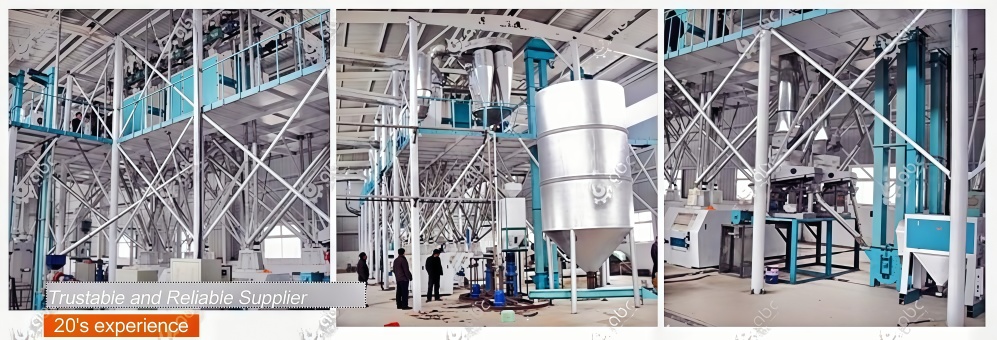
Complete Mazie Flour Mill Plant for Sale
In real-world project implementation, success depends not on individual equipment performance, but on system-level engineering: Custom capacity planning (avoid overinvestment) ,Local market-adapted solutions (Africa project experience) ,Modular design (future expansion ready) ,Turnkey EPC solutions for maize processing plant and flour plant and so on. If you need a tailored plan for maize milling in Uganda, including ROI modeling and equipment configuration, you can directly request a customized solution.

What Kind of Grain Mill Plant Is Right for You?
In a grain mill plant project, equipment selection is not just about scale—it is about achieving the optimal combination of: Effective extraction rate × cost per ton. Below is a breakdown based on real operational data from Africa and Southeast Asia, covering maize flour milling process and wheat milling systems.
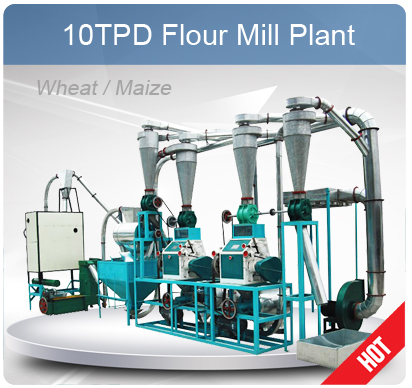
1–20 PD Small-Scale Plant
Applicable for: First-time investors in maize milling machine in Uganda ,rural or local consumption markets ,stable raw material supply with limited distribution radius and so on.
|
Indicator |
Range |
Key Variables |
|---|---|---|
|
Extraction rate |
68%–74% |
Raw grain quality, screening precision |
|
Energy consumption |
32–45 kWh/ton |
Motor efficiency |
|
Fine flour ratio |
55%–65% |
Screen structure |
|
Operation time |
≤12h/day |
Labor dependency |
At this level, optimizing cleaning systems and screening structures can improve profitability by 2%–4% without increasing core milling machine for maize investment.
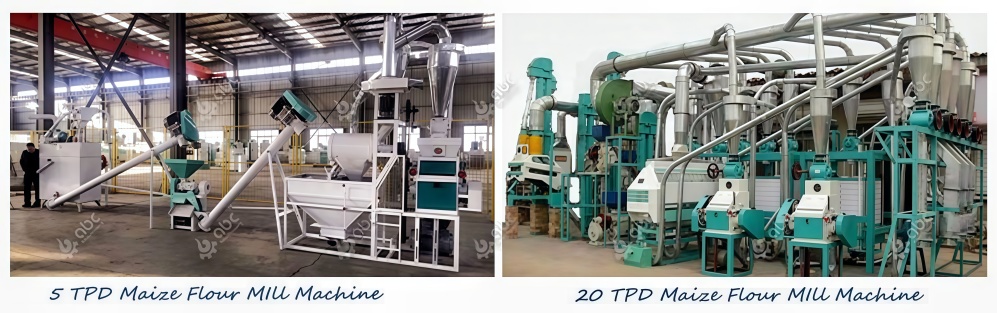
Different Scale of Maize Flour Plant in Uganda
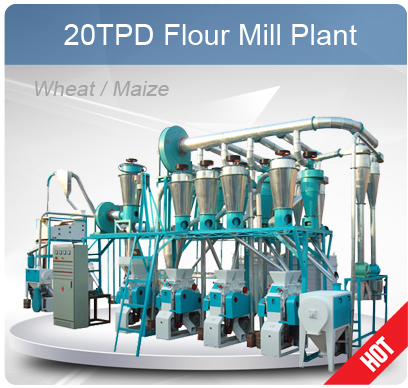
20–100 TPD Medium-Scale Plant (Recommended)
Applicable for:urban supply chains,supermarkets and wholesale markets and branded products from maize flour mill in Uganda.
Key upgrades include:
-
Multi-stage cleaning (screening, destoning, air separation, magnetic separation)
-
Multi-pass grinding system
-
Plansifter grading system
-
Transition from single-pass to circulating milling system
With optimized configuration, ABC Machinery solutions can improve overall efficiency by 10%–25% without significantly increasing CAPEX in maize mill plant projects.
100+ TPD Large Industrial Plant
Applicable for: Industrial investors ,Government or EPC projects ,Export-oriented maize flour milling machine operations.
|
Indicator |
Industrial Range |
|---|---|
|
Extraction rate |
78%–82% |
|
Energy consumption |
22–30 kWh/ton |
|
Automation level |
≥90% |
|
Operation |
24h × 300 days/year |
Important note: Claims of “85%+ extraction rate” are not realistic due to natural bran ratios in maize. Excess extraction leads to: Higher ash content ,Lower product quality. A reasonable commercial range is 78%–82% for maize flour machine systems.
A Smarter Way to Build a Maize Milling Plant With ABC Machinery
In maize milling in Uganda, success depends on adopting the right plant-building logic: Start from the market → Define capacity → Configure equipment.This approach is more stable than selecting a maize mill machine first and then searching for a market.Compared to traditional suppliers, ABC Machinery focuses on:custom capacity planning;proven Africa market experience,modular plant design and turnkey EPC solutions for maize processing plant.
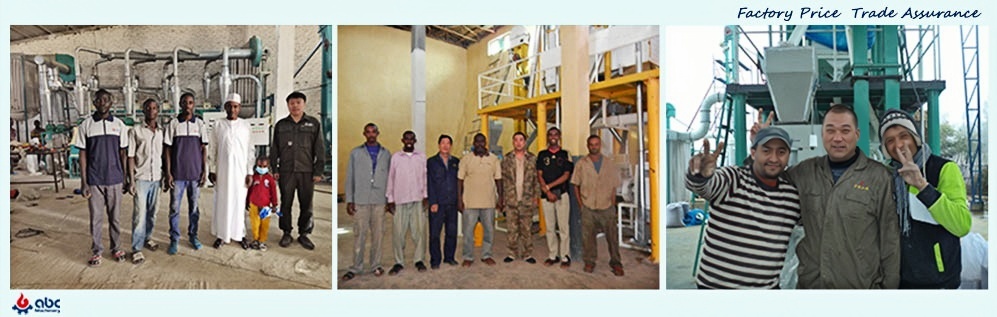
Choose Best Mazie Mill Plant Supplier at Low Cost
We have successfully delivered projects in Nigeria, Kenya, South Africa, Zambia, Indonesia, and Chile. Instead of comparing equipment prices alone, obtaining a localized and customized solution is far more valuable for decision-making in maize milling business in Uganda. If you are planning a maize flour mill in Uganda, contact ABC Machinery to get your customized plant design and investment plan.
-
I am in northern Uganda with maize resources and a $30,000–$40,000 budget. What scale is suitable?
-
Within this budget, a 10–20 TPD maize mill plant is recommended. Basic configuration includes cleaning + grinding + simple screening using a maize flour milling machine. For tailored configuration based on your raw material and market, contact us for a customized plan.
-
What is the investment cost for a local market-oriented plant?
-
Typical cost ranges:Small-scale: $30,000–$80,000;Medium-scale: $80,000–$300,000.
Costs depend on capacity, automation, and system completeness of the flour mill plant. If you are not sure which scale fits your budget, you can also share your investment range and raw material situation, and we will help you design a preliminary matching plan for your maize milling in Uganda project. -
Can I start small and expand gradually?
-
Yes, this is a very common and highly recommended investment strategy in maize milling in Uganda. The typical expansion path is: 10–20 TPD (start-up stage) → 20–50 TPD (growth stage) → later expansion into feed or multi-product lines The key is reserving expansion space and power capacity during initial design of the maize processing plant. With proper planning, a maize flour milling machine system can be upgraded without major reconstruction. If you would like to evaluate an expandable solution, feel free to contact us for professional engineering advice.
- How much factory space is required for different capacities of a maize milling plant?
-
Based on industry experience for maize mill plant projects:10–20 TPD: 200–500㎡;20–50 TPD: 500–1200㎡. Different projects vary significantly in equipment configuration, factory layout, and expansion strategy of the maize flour machine system. If you already have a preliminary site or plan, we can also provide tailored layout optimization suggestions for your maize flour milling process project.

Projects