 Build Your Future!
The right wheat flour milling machine determines your extraction rate, energy cost and payback period from the first shift. Brazil imports over half of its annual wheat supply, which is why this page focuses on ABC Machinery's 1–500 TPD wheat flour milling machine range for the local market — wheat flour machinery engineered for Brazilian wheat varieties. After reading, you can shortlist wheat flour production equipment and request a tailored flour plant proposal for your flour mill project.
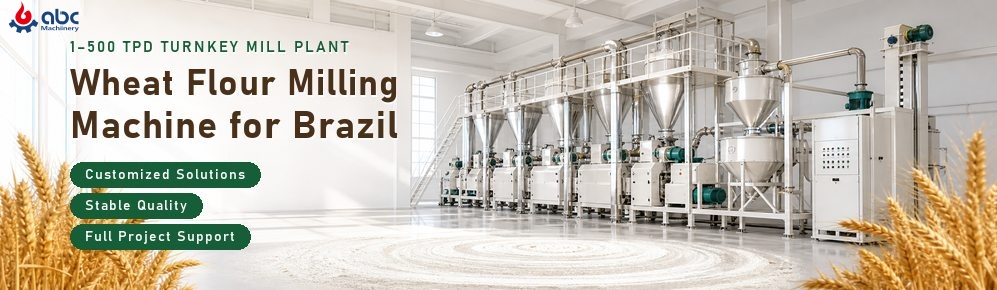
Flour Types and Consumption in Brazil
Brazil's market runs on four main flour types — bread, biscuit/pastry, pasta and household — each with distinct protein requirements and end uses, each placing different demands on the wheat mill process:
| Flour type | Protein requirement | Main end uses |
|---|---|---|
| Bread flour | High gluten (≥11%) | French bread, pan bread, frozen dough |
| Biscuit / pastry flour | Low gluten (≤10%) | Biscuits, cakes, cookies |
| Pasta flour | Durum wheat | Pasta, macaroni |
| Household flour | All-purpose | Retail, small bakeries |
Behind these four types lies Brazil's specific raw material structure, which shapes every flour making machine decision: local wheat is mostly soft and medium-gluten varieties (BRS 264 and BRS 394 suit biscuit and pastry milling), while high-protein hard wheat is largely imported — Argentina supplies over 80% of imports via Mercosur. Soft and hard wheat are blended by the day's mix, so raw material quality itself fluctuates: batch consistency cannot rely on the wheat, only on the process. Whatever flour type you supply, batch consistency starts with the milling line configuration — contact us below for flour mill process advice tailored to your target product.

Wheat Flour Milling Process and Core Technical Parameters
Every ABC Machinery wheat machinery line follows the same five-stage wheat mill process — cleaning, tempering, milling, sifting and purification — with every stage of the wheat flour processing equipment engineered to capacity and raw material; the flour mill machinery specification — and the flour mill machine cost — is finalized after the engineering team receives your requirements.
- Core Process Parameters at a Glance
| Stage | Core configuration | Industry reference range * |
|---|---|---|
| Cleaning | Magnetic separation, destoning, scouring, sifting (per raw material) | Three-stage impurity removal |
| Tempering | Time set by variety and moisture, moistening to soften the endosperm | 12–24 hours, 15–16.5% moisture |
| Milling | Break passages peel + reduction passages grind, roll gap tuned to wheat hardness | 250 mm rolls, 800–1000 mm long, 4–8 passages |
| Sifting & purification | Plansifter grading with online ash / moisture monitoring | 75–78% extraction rate |
| Electrical & automation | 220/380 V, 60 Hz, IP54 protection, PLC energy monitoring | ANVISA fortification dosing point reserved |
Industry reference ranges are for guidance only; final parameters follow the flour mill process design.
Unsure which parameters fit your raw material? Send your wheat type and target flour specs for a configuration recommendation covering every stage of the wheat flour milling process — from wheat cleaning machine selection to final sifting.
Model Selection Checklist: Match by Flour Type, Capacity and Site
Three tiers of flour milling machinery cover the capacity range, but choosing the right one depends on three questions: what flour you mill, how many tonnes per day, and what your building and power supply look like.
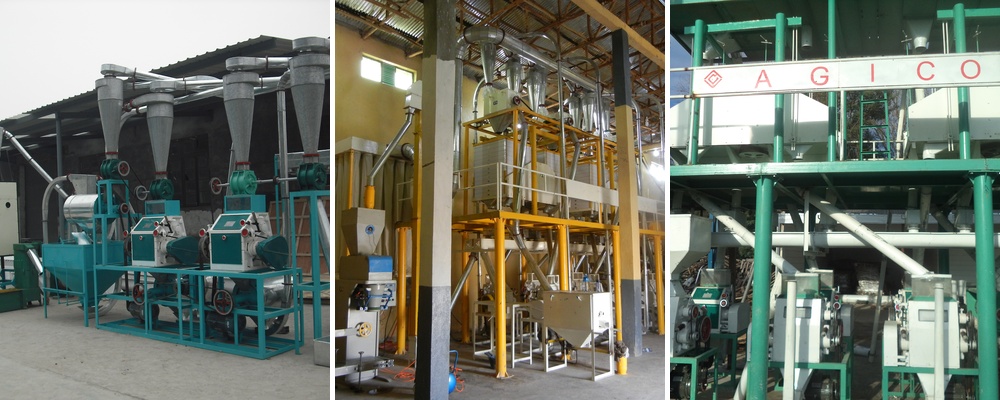
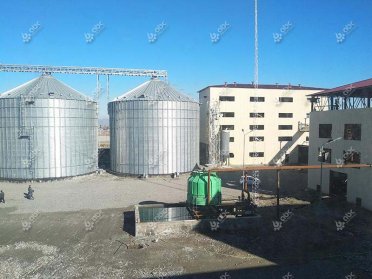
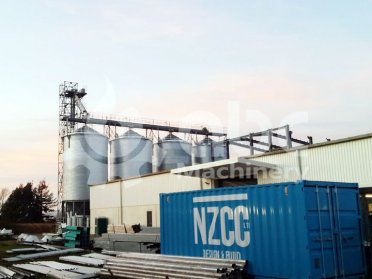
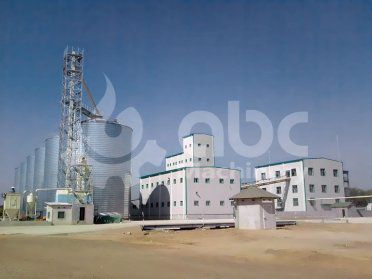
Real Project Cases of Complete Flour Milling Plant
-
Step 1: Define your flour type.
Bread flour needs a high hard-wheat blend and enough break passages, with extraction rate and ash control front and center; biscuit and pastry flour runs mostly on soft wheat, where sifting and purification precision matter more; pasta flour must preserve semolina granularity and is designed around durum; household flour takes a standard configuration.
-
Step 2: Define your capacity.
Under 30 tonnes per day, a compact wheat mill machine is the right call; 30–150 tonnes, a medium mill; 150–500 tonnes, an industrial plant. Size for the target daily output one year after commissioning — not today's sales volume.
-
Step 3: Define your site conditions.
Check whether the building fits the tempering bins and pneumatic conveying (compact 150–400 m², medium 400–1,500 m², industrial from 1,500 m²); whether supply is single- or three-phase and 60 Hz; and match your flour mill cost against the three investment brackets to set the automation level and modules such as flour blending and silos.
-
1–30 TPD compact mills
The entry point: a compact flour mill machine with low power draw and basic PLC suits small bakeries, pasta workshops and community mills, with single- or three-phase 60 Hz supply.
-
30–150 TPD medium mills
The sweet spot for regional flour mills serving bakeries within a 200 km radius: a full cleaning and tempering line — wheat cleaning machine, scourer and tempering bins — with pneumatic conveying delivers consistent output — the most common starting scale for a wheat flour mill plant.
-
150–500 TPD industrial plants
The top tier: a complete flour plant with multi-line design, automated wheat intake, silo management and flour blending — flour making machines engineered for 24/7 operation and group-level quality control.
| Capacity | Investment reference | Installed power | Building area | Key configuration | Typical buyer |
|---|---|---|---|---|---|
| 1–30 t/day | USD 30,000–150,000 | 30–120 kW | 150–400 m² | Basic cleaning, single-bin tempering, 250 mm rolls, 4 break + reduction passages, plansifter, basic PLC | Bakery, startup |
| 30–150 t/day | USD 150,000–800,000 | 120–600 kW | 400–1,500 m² | Full cleaning and tempering line, pneumatic conveying, 800–1000 mm rolls, 4–8 passages, online ash / moisture monitoring, full-line PLC | Regional flour mill |
| 150–500 t/day | USD 1–5 million | 600–2,500 kW | 1,500–5,000 m² | Automated wheat intake, silo management, flour blending, plant-wide PLC, ANVISA fortification dosing point | Milling group |
Investment brackets are planning-level references for estimating wheat flour mill plant cost and comparison; the final figure follows the project proposal.
How to Choose the Right Wheat Flour Milling Machine Manufacturer
A payback calculation only holds if you pick the right supplier. When choosing a wheat flour milling machine manufacturer, the flour machine price is just the starting point: capacity coverage, certification compliance, after-sales support, customization and turnkey engineering — five dimensions decide the total cost and operational stability five years after commissioning. ABC Machinery is a manufacturer of flour mill machinery, integrating R&D, manufacturing and export, based in Anyang, Henan, China, exporting wheat flour milling machines and complete flour mills worldwide.
| Dimension | What ABC Machinery offers |
|---|---|
| Product coverage | 1–500 TPD wheat flour milling machines and turnkey flour mills, from compact to industrial |
| Certification | CE certified, ISO 9001 quality management system |
| Brazil adaptation | 220/380 V, 60 Hz supply, ANVISA fortification-ready design |
| Engineering services | Layout design, on-site installation and commissioning, operator and maintenance training |
| After-sales support | 48-hour spare parts response, PLC remote diagnostics |
| Customization | By wheat variety, site conditions and automation level |
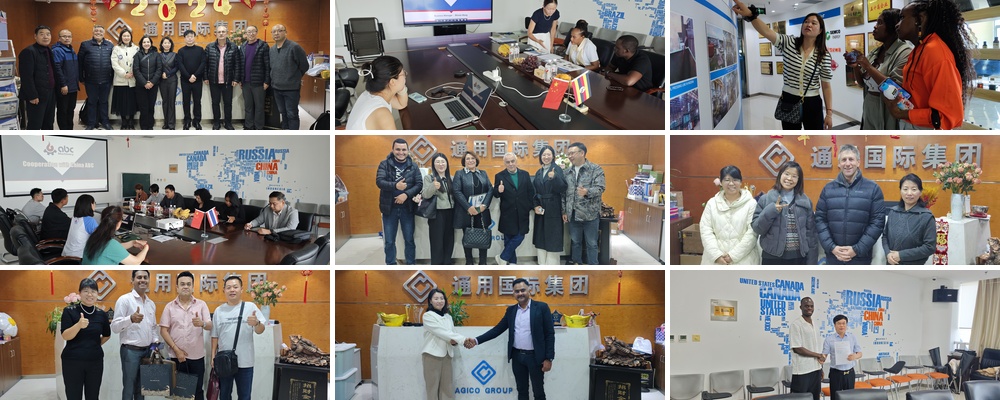
Overseas Customers Visiting ABC Machinery for Business Negotiation
If you are evaluating wheat flour mill machine suppliers for the Brazilian market, send us your capacity, wheat variety and building conditions for your flour mill project — ABC Machinery responds with a layout drawing, specification sheet and payback calculation, letting the proposal speak before the price. As a wheat flour equipment supplier with years of export experience, we care more about long-term performance after commissioning.

Projects