 Build Your Future!
Satrt Profitable Poultry Feed Mill Business
This column provides a comprehensive guide to poultry feed formulation, covering practical nutrition strategies, ingredient selection, and processing methods for different poultry species and growth stages. Whether you are feeding layers chicken, broilers, chicks, ducks, geese, or turkeys, ABC Machinery offer clear formulas, raw-material insights, and production techniques to help you improve feed quality, reduce costs, and optimize poultry performance.
From feed ingredient analysis to pelletizing processes, small-scale feed mill setup, and cost for homemade poultry feed, this column brings together all essential knowledge for both beginners and commercial producers.
Explore the topics below to understand how to design balanced diets, avoid common production issues, and build efficient poultry feed manufacturing lines.
- Homemade Poultry Feed Cost Analysis: Is Making Your Own Feed Really Worth It?
- What You Need to Start a Poultry Feed Mill Plant?
- Chick Starter Feed Formula: Design for 0–4 Weeks Diets
- Broiler Feed Formulation: Ingredient Strategies for Faster Growth
- Layer Feed Formulation: Boost Egg Production Efficiency
- Chicken Feed Formulation Guide (Starter, Grower, Finisher)
- Key Poultry Feed Ingredients: Functions of Corn, Soybean Meal, Bone Meal, Vitamins, and More
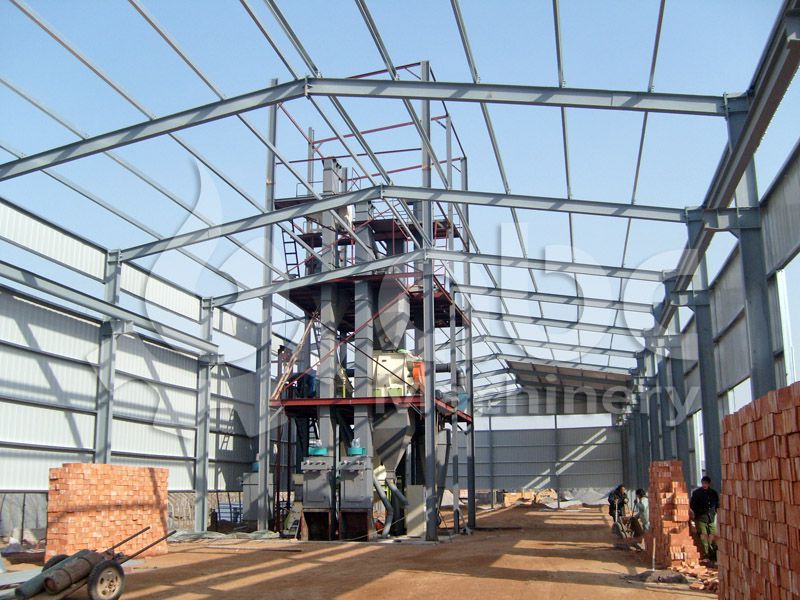


Engineering Logic and Core Principles of Poultry Feed Formulation
The foundation of poultry feed formulation depends on quantifying energy, protein, amino acids, minerals, vitamins, and functional additives in precise ratios. Modern mills must maintain ±0.5% mixing accuracy, ingredient moisture around 10–12%, and formulation repeatability above 95% to stabilize both flock performance and processing efficiency.
Nutrient Modeling for Multi-Stage Poultry Diets
Multi-stage poultry diet modeling (a core concept behind multi-stage poultry diet modeling) converts biological requirements into quantifiable feed formulas. Broilers chicken require metabolizable energy between 2,950–3,150 kcal/kg and crude protein ranging from 20–23% in starter phases, while layers need 3.5–4.0% calcium to maintain eggshell hardness above 4.5 kg/cm². These values are embedded into linear programming and least-cost models.
Typical Nutrient Targets Table
| Poultry Type | Stage | ME (kcal/kg) | Crude Protein (%) | Calcium (%) | Avail. P (%) | Nutrition Notes |
|---|---|---|---|---|---|---|
| Broiler | Starter (0–14d) | 2,950–3,050 | 21.5–23.0 | 0.90–1.00 | 0.45–0.50 | High protein for rapid early growth and immune development |
| Grower (15–28d) | 3,000–3,100 | 19.0–20.5 | 0.80–0.90 | 0.38–0.42 | Protein decreases, energy slightly increases to support weight gain | |
| Finisher (29–42d) | 3,050–3,150 | 17.0–18.5 | 0.75–0.85 | 0.35–0.40 | Higher energy for fat deposition; lower protein requirement | |
| Layer | Pullet / Grower (8–16 wk) | 2,700–2,800 | 15.0–16.5 | 0.80–1.00 | 0.40–0.45 | Focus on frame and organ development; low calcium |
| Pre-Lay (17–18 wk) | 2,750–2,850 | 16.0–17.0 | 2.0–2.5 | 0.40–0.45 | Calcium increased to build reserves before laying | |
| Peak Lay | 2,750–2,850 | 16.5–17.5 | 3.7–4.2 | 0.38–0.45 | High calcium to maintain eggshell quality during peak production | |
| Duck | Starter (0–14d) | 2,900–3,000 | 19.0–20.0 | 0.90–1.00 | 0.40–0.45 | High protein supports rapid muscle and bone growth |
| Grower (15–35d) | 2,950–3,100 | 17.5–18.5 | 0.90–1.10 | 0.38–0.42 | Higher energy improves feed efficiency and growth rate |
Engineering Methods: From Modeling to Ingredient Matching
During feed production, the nutritional content of raw materials is tested using specialised methods, typically maintaining fluctuations within ±1.5%. In actual processing, each ingredient has a maximum addition rate: oils and fats are typically capped at 5–8%, alternative proteins at 15%, and enzyme preparations generally controlled within 0.3–0.5%. Our feed processing machinery also conducts real-time checks during production to verify ingredient accuracy, with weighing deviations for trace ingredients usually maintained within ±50 grams.
Engineering grade ingredient assessment gives each raw material a processing score that reflects grind performance, moisture stability, pellet forming characteristics, and nutrient density. Typical cereal grains, such as corn, obtain a high consistency score, while ingredients like DDGS receive lower scores due to higher fiber and oil variation.
- Energy Carriers:Corn, wheat, sorghum with 8–14% moisture for stable grinding.
- Protein Sources:Soybean meal (44–48% CP), fish meal (55–65% CP).
- Mineral/Vitamin Premixes:Provide 20–30 micronutrients with consistent micro-dosing control.
- Functional Additives:Enzymes, probiotics, emulsifiers supporting digestion.
Production Constraints That Shape Practical Feed Formulation
Formulations must meet cost, availability, and processing limits. Grinding fineness typically targets 650–750 μm to balance pellet durability (>92%) and energy savings (5–8 kWh/ton). Moisture must remain below 12.5% to reduce mold growth risk by 30–40%. Plants handling 20–40 ingredients require rapid switching with less than 3-minute changeover.
Poultry feed mills operate under strict supply-chain constraints where ingredient price fluctuations of ±10% can alter formula cost by $8–12 per ton. Formulators use engineering logic to stabilize recipes by adjusting secondary ingredients within safe inclusion thresholds.
Advanced feed mill machine integrate MES-driven traceability to maintain consistent nutrient profiles and keep deviation under ±0.3% regardless of batch size.
Partner with us to develop a nutrition-driven feed mill strategy that maximizes flock performance and stabilizes your production line.

Technical Choices in Poultry Feed Ingredients and Formula Design
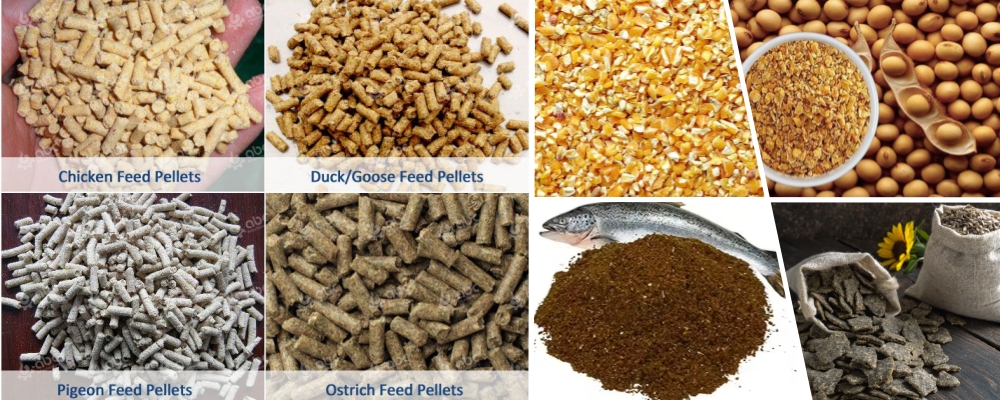
Poultry Pellet Feed and Main Ingredients: Corn, Soybean Meal, Fish Meal, Sunflower Cake
Ingredient selection drives both nutrition and processing performance, integrating principles from poultry feed ingredient test and raw-material control strategies. Most commercial mills rely on 60–70% energy ingredients and 15–25% protein sources while maintaining strict storage and quality monitoring.
Raw ingredient variability can reach ±4% in crude protein and ±0.5% in moisture, requiring continuous NIR calibration. Improper storage increases aflatoxin risks by 20–50%, especially when humidity exceeds 75%.
Alternative materials—sunflower meal, rapeseed meal, and DDGS—typically reduce costs by 5–12% per ton but must remain within safe inclusion limits to avoid lowering pellet durability below 90%. Functional additives also enhance formula stability: enzymes improve nutrient digestibility by 3–7%, and mycotoxin binders reduce contamination impact by up to 40%.
Unlock performance gains in ingredient cost control—connect with our formulation engineers for customized raw-material optimization.
Pelleting Process Influence on Poultry Feed Formulation
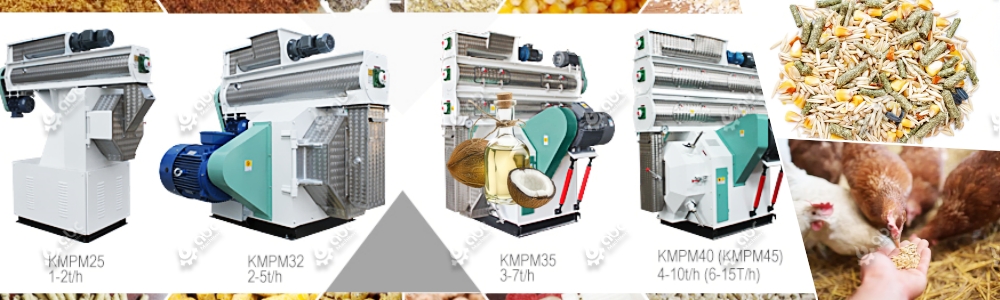
High-Quality Feed Mill Machine at the Best Price
The poultry feed pelleting process determines how well a formulation performs during conditioning, pelleting, and cooling. Grind size, moisture, and steam quality influence pellet durability by up to 15%.
Conditioning operates at 70–82°C with 14–17% final mash moisture for optimal pellet strength. Excess moisture above 18% risks cooler load spikes and 3–5% pellet breakage. Pellet mills typically run at 5–12 tons/hour with energy consumption around 20–28 kWh/ton.
Pellet durability factors improve with proper binder levels (0.5–1.0%), adequate fiber (2–3%), and correct conditioning retention time (30–45 seconds). Mills using automatic moisture-controllers report 5–8% throughput gains.
Related Post: Small Feed Pellet Mill Machine for Sale>>
Improve pellet durability and conditioning efficiency—connect with our processing specialists to refine your formulation-to-pellet workflow.
Commercial Poultry Feed Production Line Design and Investment Considerations
Commercial lines from 1–20 TPH require coordinated design covering layout, equipment sizing, and operational costing. A 5 TPH line typically consumes 60–85 kWh per ton and requires 6–10 workers per shift. Total investment ranges from $350,000 to $1.5 million depending on automation, silo capacity, and pelleting configuration in a poultry feed mill design project.
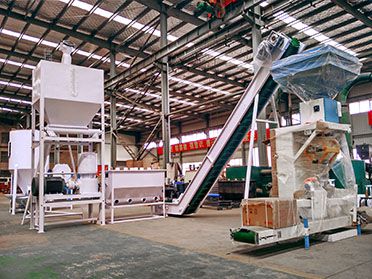
A typical plant layout includes grinding, mixing, pelleting, cooling, screening, and packing sections. ROI periods normally fall between 18–30 months.
Get your customized poultry feed production line blueprint—contact our engineering team for a tailored investment proposal.