 Build Your Future!
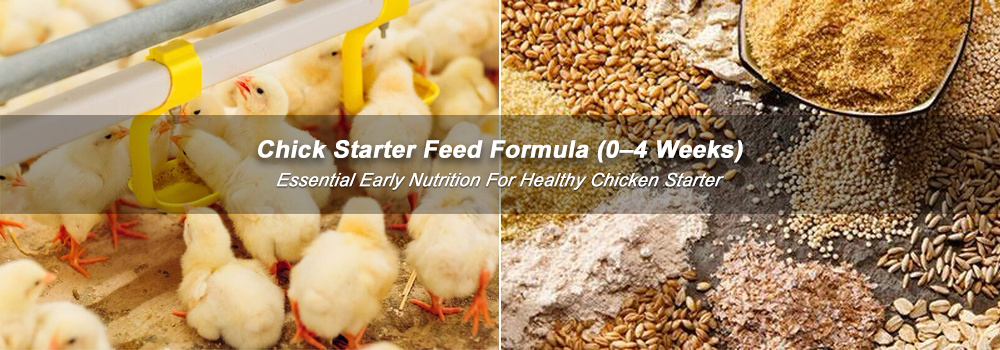
Chick Starter Feed Formula
Typical Chick Starter Feed Formulations (0–4 Weeks)
Early chick diets prioritize digestible energy, high-quality protein, and balanced amino acids to support immunity and rapid skeletal growth. Below are practical, field-proven starter formulas with different cost and performance focuses.
- High-Protein Starter Formula (0–4 Weeks): 48–52% Corn, 32–36% Soybean Meal, 4–6% Fish Meal/MBM, 3–4% Soybean Oil, 2–3% Wheat Bran, 1.8–2.0% Dicalcium Phosphate, 1.2–1.4% Limestone, 0.5% Premix, 0.30–0.40% Methionine + Lysine
- Digestibility-Focused Formula (0–4 Weeks): 50–55% Corn, 28–32% Soybean Meal, 5–8% Broken Rice/Wheat, 3–4% Soybean Oil, 3–4% Fish Meal, 1.6–1.8% Dicalcium Phosphate, 1.1–1.3% Limestone, 0.5% Premix, 0.25–0.35% Synthetic Amino Acids
- Cost-Effective Starter Formula (0–4 Weeks): 54–58% Corn, 24–28% Soybean Meal, 8–10% Wheat Bran/DDGS, 3–4% Oil/Fat, 2–3% Animal Protein, 1.4–1.6% Dicalcium Phosphate, 1.0–1.2% Limestone, 0.5% Premix, 0.20–0.30% Met + Lys

0–4 Week Chick Starter Feed Formula Early Nutrient Requirements
Chicks in the first 0–4 weeks require a dense chick starter nutrient profile with energy levels between 2,900–3,050 kcal/kg ME and crude protein around 20–22%. These values align with core poultry feed formulation principles while supporting the functional design of a chick starter feed formula that maximizes early growth. During the first 7 days, feed intake averages 80–100 g per chick, meaning that even a 2–3% nutrient imbalance can reduce final weight by 40–60 g at 4 weeks. This period represents the highest nutrient sensitivity in the entire broiler lifecycle. (Read More: Broiler Chicken Feed Formulation Design>>)
Energy–Protein Balancing And Metabolic Efficiency
Correct energy–protein ratios reduce heat production and improve feed conversion. Research shows that chicks under 300 g body weight have limited thermoregulation capacity, requiring digestible amino acids such as lysine at 1.20–1.35%, methionine at 0.50–0.58%, and threonine at 0.75–0.80%. When designing early-stage poultry nutrition engineering systems, feed mills typically apply NIR (Near-Infrared Reflectance) technology to validate raw material energy values with ±30 kcal/kg accuracy, preventing the inconsistent energy density that often appears in corn–soy diets.
Mineral And Micro-Ingredient Precision
Starter diets require calcium levels between 0.85–1.00% and available phosphorus at 0.45–0.50%. Variations beyond ±0.05% can affect skeletal uniformity, directly impacting broiler weight at harvest by 80–120 g. Accurate micro-dosing systems capable of 50–200 g precision per batch are essential for vitamins, enzymes, and trace minerals. In many feed mill plants, MES (Manufacturing Execution System) integration enables batch traceability within 2–3 seconds, ensuring mineral uniformity across production runs.
Digestive System Development And Feed Physical Form
Chicks at 0–4 weeks have a gizzard capacity of only 3–5 g, meaning feed particle size must remain within 400–600 microns to support proper digestion. Pellet durability index (PDI) should maintain ≥88%, and fines should not exceed 8–10% to avoid selective feeding.
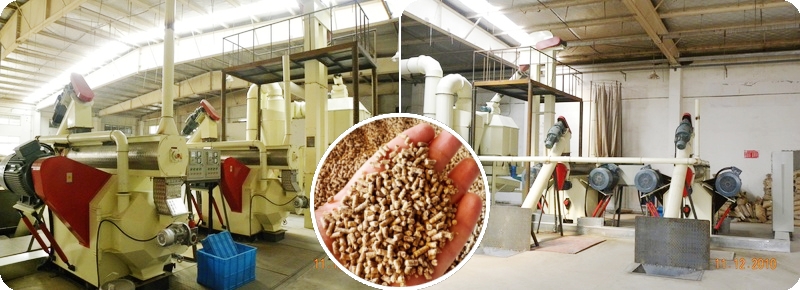
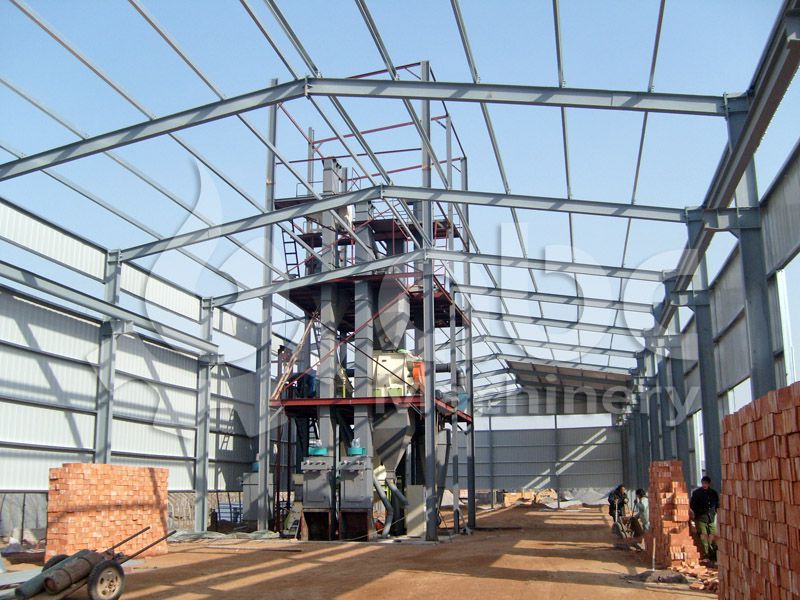
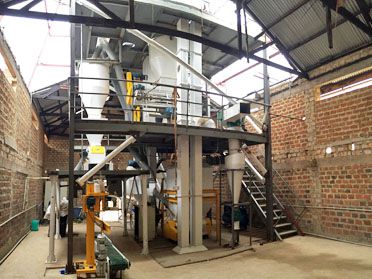
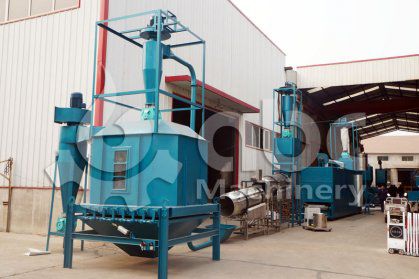
Commercial Chicken Starter Feed Pellets Manufacturing Plant
Nutrient Density Reference Table
| Nutrient Parameter | Recommended Range (0–4 Weeks) | Engineering Notes |
|---|---|---|
| Crude Protein | 20–22% | Requires precise soy/corn ratio calibration |
| ME (kcal/kg) | 2,900–3,050 | NIR validation recommended |
| Lysine | 1.20–1.35% | Impacts breast muscle development |
| Calcium | 0.85–1.00% | Controlled via micro-dosing system |
| Particle Size | 400–600 μm | Linked to pellet uniformity |
High-density starter diets demand precise batching accuracy and pellet quality monitoring to sustain uniform growth during the first 28 days. Plants processing more than 20–30 tons/hour require stable conditioning parameters and controlled die compression ratios to avoid nutrient degradation.
Practical Design Notes For Feed Mill Engineers
- Micro-Dosing Accuracy:Consistency within ±100 g improves vitamin and mineral stability for early-stage birds.
- Conditioning Temperature Control:Maintaining 75–82°C prevents enzyme destruction.
- Particle Size Optimization:Targeting 500 microns improves gizzard development and feed intake uniformity.
- Batching Sequencing:Liquid enzymes should be added during post-pelleting to avoid heat denaturation.
- Raw Material Variation Tracking:Daily NIR checks help maintain consistent ME values even when corn moisture fluctuates 1–2%.
Partner with us to develop a nutrition-driven feed mill strategy that maximizes your flock’s early performance and your plant’s processing efficiency.
Ingredient Selection And Processing Characteristics For Chick Starter Feed
Efficient chick feed ingredient selection optimizes nutrient availability and ensures compatibility with feed mill operations. A typical starter diet includes 55–60% corn, 28–32% soybean meal, 4–6% protein concentrates, and 1–2% enzyme blends. Raw material particle size affects the grinding load—corn with 12–13% moisture grinds to 500 microns efficiently, whereas soy meal with 46–48% protein tends to produce more heat during milling.
Ingredients with high fiber require adjusted sieve openings to maintain ideal particle size for chick starter feed. Animal protein ingredients, though optional, must remain below 3–5% to prevent pellet instability. Processing characteristics such as oil content also influence die compression ratio; materials exceeding 5–6% fat may reduce pellet durability.
Pellet Processing Optimization For High-Quality Chick Starter Diets
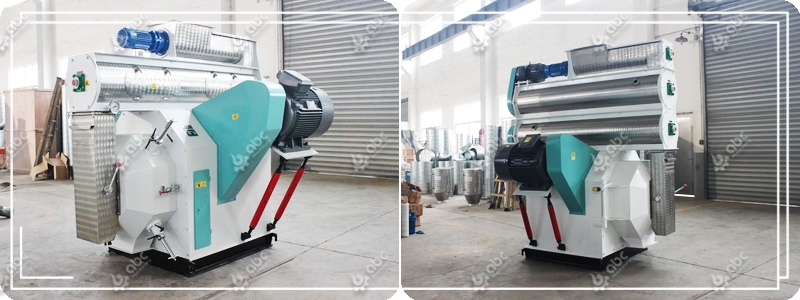
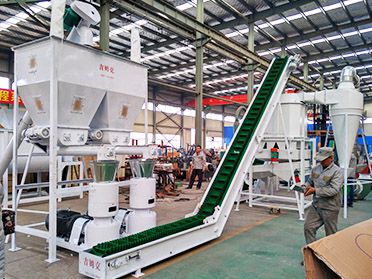
Commercial Animal Feed Pellet Mill Machine Manufacturer
Grinding And Particle Size Engineering
Particle size variability significantly affects pellet consistency. Maintaining a 400–600 μm range reduces pellet fractures by 8–12% and enhances feed intake by 3–4 g/day. Hammer mill rotor speeds between 2,500–3,000 rpm with a 3.0–3.5 mm screen hole provide optimal starter feed texture.
Conditioning Parameters And Heat–Moisture Balance
Conditioning governs starch gelatinization and durability. Steam pressure at 1.8–2.2 bar, retention time of 35–45 seconds, and final mash moisture at 15–17% are typical engineering parameters. Overheating above 85°C can reduce enzyme viability by 15–20%, directly impacting digestibility.
Pelleting And Die Selection
Die compression ratios of 1:8–1:10 support the mechanical stability required for chick starter pellets. Feed pellet mills with 75–90 kW motors ensure stable output of 6–10 tons/hour. Pellet durability index (PDI) testing should be performed every 30–60 minutes, with acceptable starter targets above 88%.
Equipment–Process Reference Table
| Component | Optimal Parameter | Engineering Outcome |
|---|---|---|
| Hammer Mill Screen | 3.0–3.5 mm | 400–600 μm particle size |
| Conditioning Temp | 75–82°C | Protects enzymes |
| Die Compression | 1:8–1:10 | Stable pellet |
| PDI Target | ≥88% | Reduced fines |
Plants utilizing fully automated conditioning zones often improve pellet uniformity by 6–8% and reduce steam waste by 10–12%, supporting consistent chick starter feed formula output in high-volume mills.
Get your customized feed processing optimization plan – contact our engineering team now.
Implementation And Quality Monitoring For Chick Starter Diets In Feed Mills
Manufacturing starter diet implementation depends on batch uniformity, real-time data tracking, and calibration consistency across equipment. Plants processing 15–25 tons/hour often rely on MES-controlled batching to ensure precision within ±1% tolerance. Uniform pellet texture improves chick intake by 2–3%, contributing to better performance at 28 days.
Two major quality monitoring indicators include PDI tests every 30 minutes and moisture checks targeting 11.5–12.5% for safe storage. Fines should remain under 10%, and particle size distribution should fall within 400–600 microns. These parameters ensure the chick starter feed formula aligns with early growth performance targets.
Feed mill calibration must include scale checks every 7–10 days, NIR recalibration every 14 days, and magnet/metal detector inspections twice per shift to prevent contamination and variability in chick diets.
Consistent implementation ensures that the chick starter feed formula delivers predictable nutrient intake across all production cycles, improving plant reliability and performance forecasting.
Strengthen your feed plant calibration and production reliability – speak with our engineering specialists for tailored solutions.
By integrating engineering-driven nutrient design with controlled processing conditions, modern feed plants can achieve exceptional 0–4 week nutrition results within systematic poultry feed formulation frameworks, ensuring long-term production efficiency and flock performance while strengthening the technical value of the chick starter feed formula.