 Build Your Future!
In recent years, an increasing number of animal poultry livestock farmers, cooperatives, and startup feed producers have begun to explore homemade poultry feed. The reasons are straightforward: rising prices of commercial feed, volatile raw material markets, and inconsistent product quality. Under these conditions, the real concern is no longer “Can it be done?” but rather “Is it truly cost-effective?”, “Where does the cost actually go?”, and “Is the investment in equipment really worth it?”
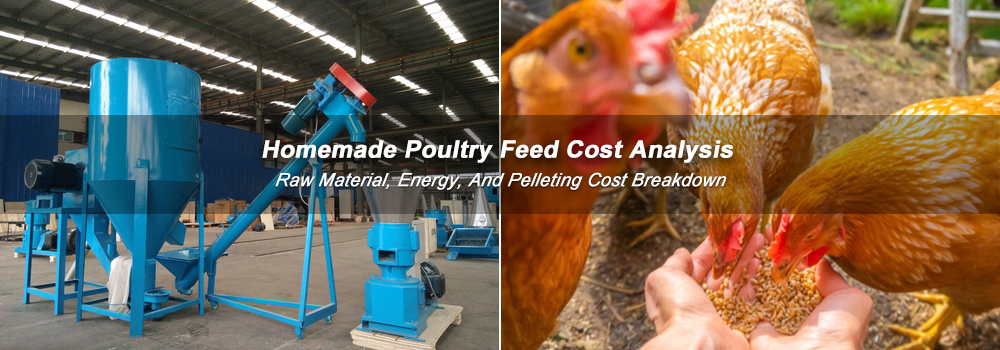
Cost Analysis of Making Poultry Feed at Home
This article breaks down the cost structure of homemade poultry feed from three core perspectives—feed ingredients, formulation, and small feed mill equipment investment—to help potential investors clearly assess whether making their own feed aligns with their business and production logic.
Where Do the Costs of Homemade Poultry Feed Come From?
The cost structure of homemade poultry feed may appear simple at first glance, but once production begins, many producers realize that fluctuations in raw material prices and equipment utilization rates have a much greater impact on final costs than expected. Without understanding these variables, it is easy to fall into the trap of “making feed yourself, yet spending more than buying finished feed.”
Raw Material Cost Breakdown: Price Volatility and Procurement Logic
For most poultry feed formulas, ingredients costs typically account for 70%–85% of total production costs. Corn, soybean meal, and wheat bran are all price-sensitive agricultural commodities, with fluctuations often occurring on a monthly basis.
Many people planning a small feed mill overlook one key point: you are not purchasing at an average price, but at a spot price. For example, a farmer attempted to purchase 30 tons of corn in one batch, only to find that prices had risen by approximately 6% compared to the previous month. Since the budget was calculated using average prices, raw material costs immediately increased by more than USD 400.
The main factors influencing raw material prices include:
- Seasonality and origin: Corn prices are generally more favorable during harvest seasons, while off-season storage incurs basis and handling costs.
- Logistics and purchasing scale: Small-volume purchases rarely receive wholesale pricing advantages.
- Formulation stability requirements: Soybean meal prices fluctuate significantly, requiring frequent formula adjustments to maintain nutritional balance.
If you plan to engage in homemade poultry feed production, raw material costs should be estimated as a price range rather than a fixed value. Otherwise, budget deviations are almost inevitable.

Main Poultry Feed Raw Materials and Feed Pellets Finish Products
Unit Cost Comparison Between Homemade Feed and Commercial Feed: A 100 kg Formula Example
A common question among producers is: “How much can I really save by making feed myself?” Below is a typical broiler feed example for comparison (data reflect industry-average ranges and do not represent any single market):
Unit Cost Comparison Between Homemade Feed and Commercial Feed
| Formula Composition (100 kg Feed) | Unit Price (USD/kg) | Required Weight (kg) | Subtotal Cost (USD) |
|---|---|---|---|
| Corn 55% | 0.22–0.28 | 55 | 12.1–15.4 |
| Soybean Meal 25% | 0.45–0.55 | 25 | 11.3–13.8 |
| Wheat Bran 15% | 0.17–0.22 | 15 | 2.6–3.3 |
| Premix 5% | 0.90–1.10 | 5 | 4.5–5.5 |
| Total (100 kg) | — | — | 30.5–38.0 |
By comparison, typical commercial poultry feed sells for 0.38–0.45 USD/kg, meaning approximately 38–45 USD per 100 kg. This comparison indicates that:
- Making your own feed can reliably save 6–12% per 100 kg
- Larger raw material procurement volumes can further widen the cost advantage
- Poor purchasing timing may eliminate the cost difference entirely
If you want us to calculate a more precise cost structure based on your local raw material prices and production targets, feel free to share your data with us. We can assist with customized homemade chicken feed formulations and cost projections.

Poultry Feed Making Machine Prices: From Entry-Level Units to Small Feed Pellet Plant Setups
Once raw material costs are relatively under control, equipment investment becomes the second decisive factor in determining whether homemade poultry feed production is worthwhile. Many investors initially think that buying a pellet machine is enough, only to realize that crushing, mixing, pelleting, cooling, and packaging each require dedicated machinery. More importantly, equipment cost depends not only on configuration but also on expected production capacity, operating hours, and future expansion plans. So how much should different-scale feed mill equipment actually cost, and which units are essential?
Related Reading: Poultry Feed Mill Machine Price>>
4 Poultry Feed Equipment Configurations: From Simple to Complete
Option A: Entry-Level Mash Feed Processing (No Pelleting)
- Suitable for: Individual farms, low production volumes, mash feed only
- Typical output: 100–300 kg/h
- Core equipment: Small crusher→vertical mixer
- Investment range: USD 1,400 – 3,500
- Features: Lowest risk for beginners; no pelleting stage; flexible raw material options
- Application: Self-use farms not requiring pellet feed
Option B: Entry-Level Pellet Feed Production (Single-Unit Trial)
- Suitable for: Limited budget, first-time pellet trials
- Typical output: 100–300 kg/h
- Core equipment: Hammer mill→mixer→flat die pellet machine (direct drive or belt type)
- Investment range: USD 2,500 – 6,000
- Features: Ideal transition from mash to pellets; pellet quality depends heavily on formulation; manual feeding required
- Application: Small to medium farms exploring diy chicken feed
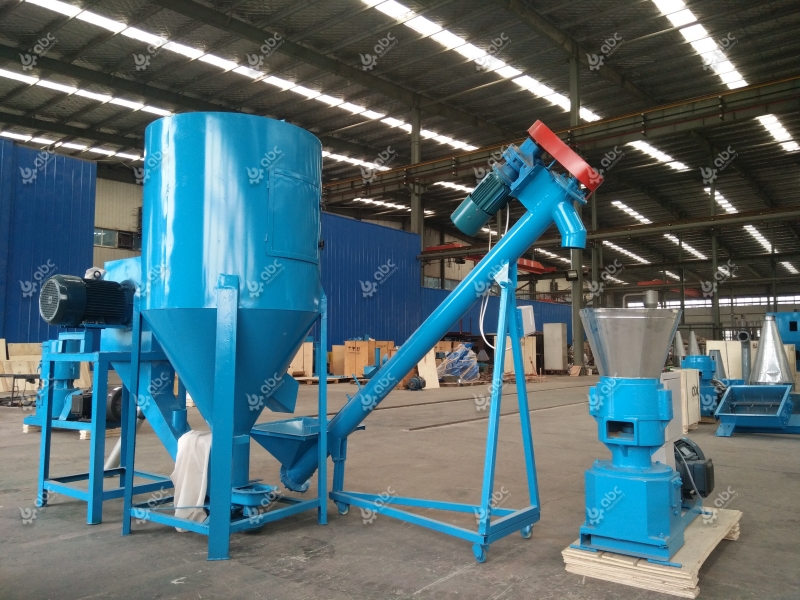
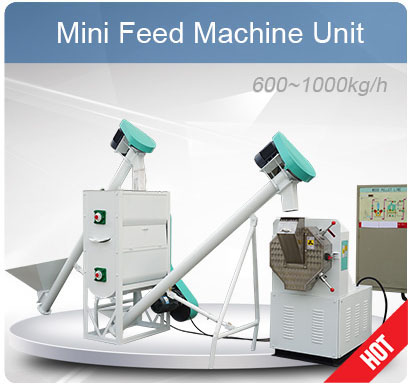
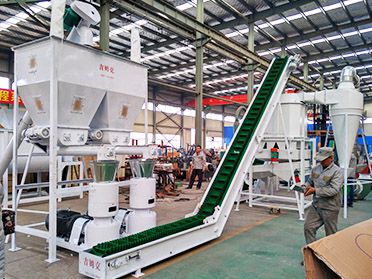
Mini Feed Pellet Mill Machine Line Manufacturer
Option C: Standard Small Pellet Feed Line (Continuous Production)
- Suitable for: Small processing units producing 2–5 tons/day
- Typical output: 300–800 kg/h
- Core equipment: Hammer mill→mixer→pellet mill→basic cooler→screening unit
- Investment range: USD 8,000 – 18,000
- Features: Stable output and pellet quality; suitable for local processing services or small-scale sales
- Application: Micro feed plants, cooperatives, startup feed projects
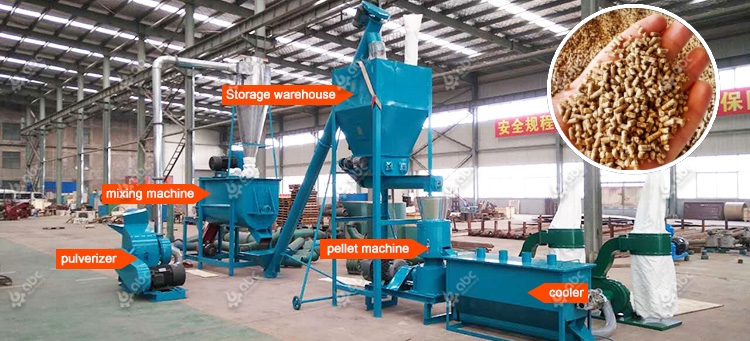
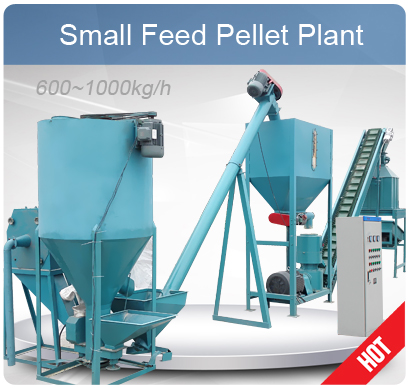
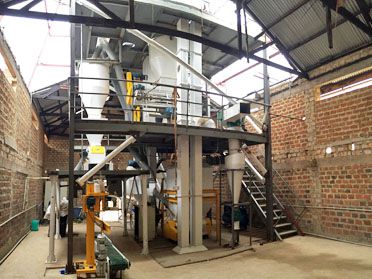
Small Feed Pellet Production Line for Sale
Option D: Semi-Automated Small Feed Factory Configuration (Expandable)
- Suitable for: Investors planning branded production and fixed daily output
- Typical output: 1–2 t/h
- Core equipment: High-efficiency milling system → large horizontal mixer with weighing → ring die pellet mill → cooler → vibrating screen → conveying and lifting system → optional packing unit
- Investment range: USD 25,000 – 60,000
- Features: Factory-level configuration; reduced labor dependency; consistent pellet quality
- Application: Small commercial feed manufacturers and long-term business projects
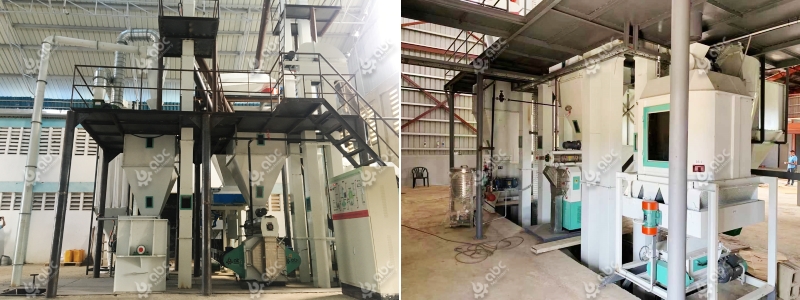
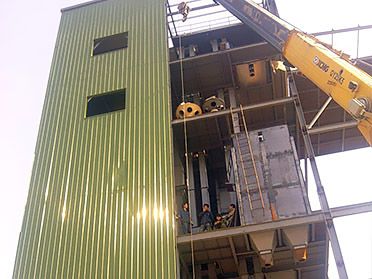
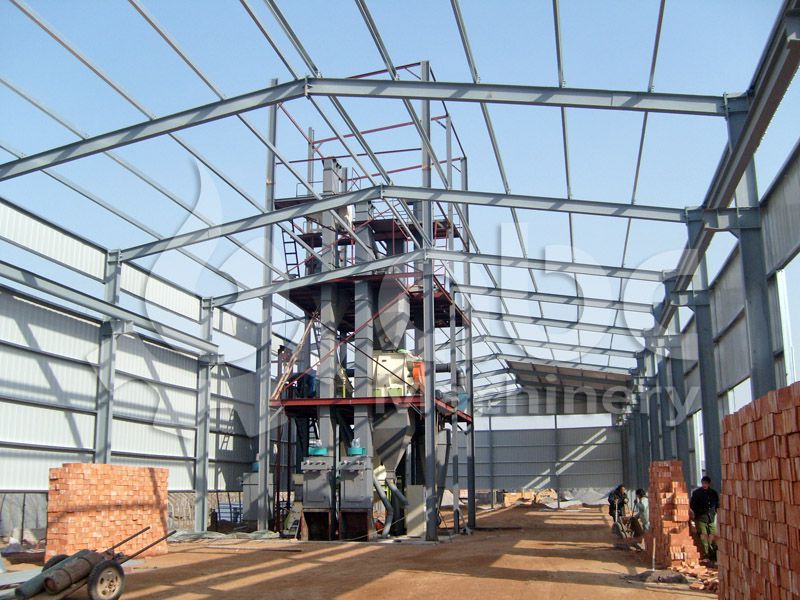
1-2TPH Animal Feed Pellet Mill Plant Low Cost
The key to real cost savings is not buying the cheapest equipment, but selecting machinery that matches your production volume, formulation, and future expansion needs.
If you are unsure whether your feed formula requires a cooler or which pellet mill suits your output, feel free to share your production targets. We can help design a more suitable poultry feed machine for home or small plant setup with detailed pricing.

When Does Homemade Feed Stop Being Cost-Effective?
Homemade poultry feed does not reduce costs in every scenario. When production volume is low, operations are discontinuous, or raw material supply is unstable, unit costs may exceed those of commercial feed.
- Daily output below 500–800 kg
- Frequent start-stop operations
- Heavy reliance on manual processes
- Unstable raw material supply
- Lack of purchasing power for small volumes
In short, making your own feed only delivers true cost advantages when output is sufficient, processes are stable, raw materials are consistent, and labor is controllable.
How We ABC Machinery Help Clients Reduce Trial-and-Error Costs
Before launching a poultry feed processing project, investors often face challenges such as inconsistent raw material quality, unclear formulations, and uncertainty in equipment selection. To minimize these risks, we provide structured support to clarify feasibility and potential bottlenecks before investment.
- Raw Material Testing and Analysis: Moisture, fiber, and crude protein analysis to determine suitability for pelleting and nutritional adequacy.
- Basic Formulation Guidance: Preliminary formulation frameworks tailored to available ingredients, supporting equipment selection and storage planning.
- Process Flow and Plant Layout Reference: Guidelines for equipment spacing, feeding methods, and labor allocation to optimize factory layout and investment efficiency.
- Pilot Testing (Optional):Small-scale trials to validate formulation performance and identify issues before full-scale equipment investment.
Global Poultry Feed Ingredients Price Trends: Annual Fluctuation Drivers for Corn, Soybean Meal, and By-Products
While feed ingredient price trends vary by region, several common annual drivers influence market behavior:
- Climate and Harvest Cycles Prices tend to drop during harvest seasons due to abundant supply, while extreme weather can trigger short-term price spikes.
- Trade Policies and Tariff Changes Export policies from major producers influence global prices of soybean meal and other key ingredients; tariff adjustments directly affect local feed production costs.
- Energy Prices and Transportation Costs Rising fuel prices increase logistics expenses, and import-dependent markets are especially sensitive to freight rate fluctuations.
- Poultry Industry Demand Cycles Peak restocking seasons push feed demand and prices upward, while market downturns often lead to temporary price easing.
- Supply Volatility of Processing By-Products The availability of bran, distillers grains, and vegetable oils depends on upstream processing volumes; any short-term shutdowns can cause sudden price increases.
Understanding these patterns helps investors plan inventory strategies, secure supply cycles, and manage long-term feed production costs.