 Build Your Future!
Layer Chicken Feed Formula For Egg Yield
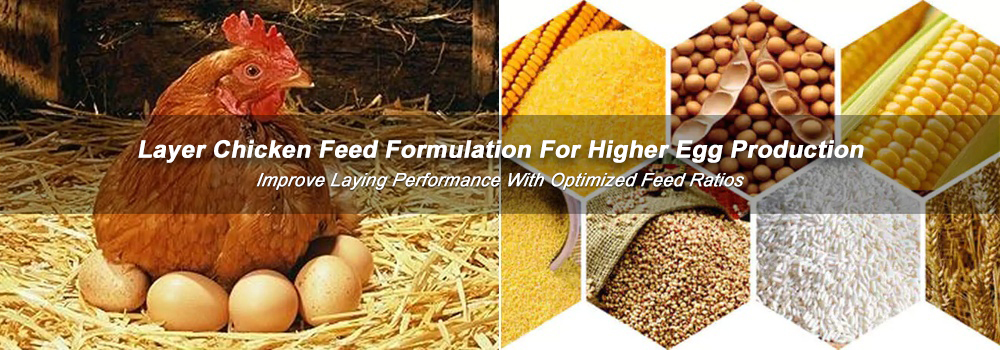
Practical Corn–Soybean Meal Layer Chicken Diet (Peak Lay Reference)
A well-balanced layer diet formula always starts from the main raw materials available in the region. The most common and cost-effective option is a corn–soybean meal–limestone formula. Below is a practical reference used by many commercial farms to support stable egg production, strong shells, and consistent feed intake.
- Corn (50–58%) – Primary energy source, good palatability; adjust inclusion based on ME requirement.
- Soybean Meal (18–20%) – Main protein supplier with stable amino acid profile; ideal for meeting lysine and methionine targets.
- Limestone (8.5–9.5%) – Fine + coarse particle blend to maintain shell strength and reduce breakage.
- Wheat Bran (4–6%) – Provides fiber to stabilize gut function; helps maintain feed intake during heat stress.
- Soybean Oil (1–2%) – Boosts dietary energy and improves pellet durability when processing.
- DCP/MCP (0.45–0.55%) – Ensures adequate available phosphorus for shell formation.
- Premix (0.3–0.5%) – Layer-specific vitamins, trace minerals, and enzyme complex to improve nutrient use.

Main Raw Materials in Layer Feed and Pellets
Layer Feed Nutrient Design Principles And Core Parameters For Optimized Layer Feed Formulation
Commercial poultry operations depend on precise layer feed formulation aligned with the broader goals of poultry feed formulation. It is essential to define clear nutrient parameters to support 310–330 eggs per hen per year and maintain feed conversion ratios around 2.0–2.2. Modern layer farms typically manage birds in cycles of 72–85 weeks, requiring accurate control of metabolizable energy (ME), crude protein (CP), amino acid balance and mineral availability. These parameters must be maintained with variances lower than 3–5% to ensure consistent production and predictable performance.
Key Energy And Protein Targets
Most commercial chicken diets are designed with ME levels around 2650–2800 kcal/kg and CP between 15–18%. Methionine, the first limiting amino acid, must reach 0.38–0.45%, while lysine typically remains at 0.72–0.78%. Adjusting these values by even 0.1% can shift egg mass output by 2–3 g/hen/day. Proper ME-to-protein ratios also help maintain body weight within the ideal 1.6–1.9 kg range as birds enter peak production.
Calcium And Phosphorus Ratios For Eggshell Quality
Maintaining the correct calcium phosphorus ratio in layer diets is critical because each egg contains approximately 2.0 g of calcium. Diets must therefore supply 3.6–4.2% calcium with particle sizes between 0.8–2.0 mm to ensure steady absorption. Available phosphorus should remain between 0.38–0.45%. A Ca:P ratio above 10:1 can depress feed intake, while below 8:1 may reduce shell thickness by up to 12%. Ensuring the proper soluble-to-insoluble calcium ratio enhances skeletal strength and prevents early depletion during long laying cycles.
Layer Feed Nutrient Profile Reference Table
| Nutrient Parameter | Typical Target Range | Technical Notes |
|---|---|---|
| Metabolizable Energy | 2650–2800 kcal/kg | Adjust by 30–40 kcal for temperature stress |
| Crude Protein | 15–18% | Maintain <3% deviation for stable egg mass |
| Methionine | 0.38–0.45% | Critical for eggshell membrane formation |
| Lysine | 0.72–0.78% | Influences albumen quality |
| Calcium | 3.6–4.2% | Coarse particles preferred |
| Available Phosphorus | 0.38–0.45% | Works synergistically with Vitamin D3 |
Elevate layer performance through data-driven nutrition planning — Connect with our engineering specialists for customized formulation support.

Phased Layer Feed Strategies For Different Egg Production Stages
Efficient layer feed formulation requires a structured phase feeding strategy for layers, ensuring appropriate nutrient allocation during rearing, pre-lay and peak production. This approach supports consistent progression from 0–18 weeks rearing to 19–72 weeks production. The pre-lay diet formulation typically raises calcium from 1.2% to 2.2%, while peak production feed adjustments fine-tune methionine and energy levels to maintain daily egg mass above 50–55 g/hen/day. A well-designed phase feeding strategy for layers ensures optimal performance.
Optimized Additive Applications in Feed Formula To Boost Egg Production
Enhancing layer hens diet quality often relies on targeted additives, including gut health enhancers for layers and eggshell quality improvement additives. Organic trace minerals at 40–60 mg/kg, enzymes such as phytase at 500–1200 FTU/kg and probiotics at 1×10⁸ CFU/g inclusion improve nutrient absorption while reducing feed costs by 3–5%. A well-integrated layer feed additives optimization plan supports sustained high laying rates.
Feed Mill Processing And Quality Control For Layer Diet Production
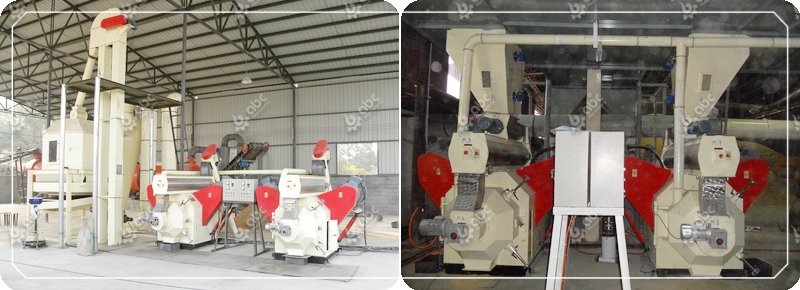
Commercial Animal Feed Milling Factory for Sale
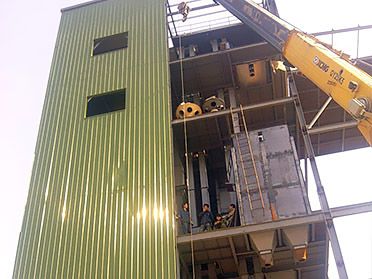
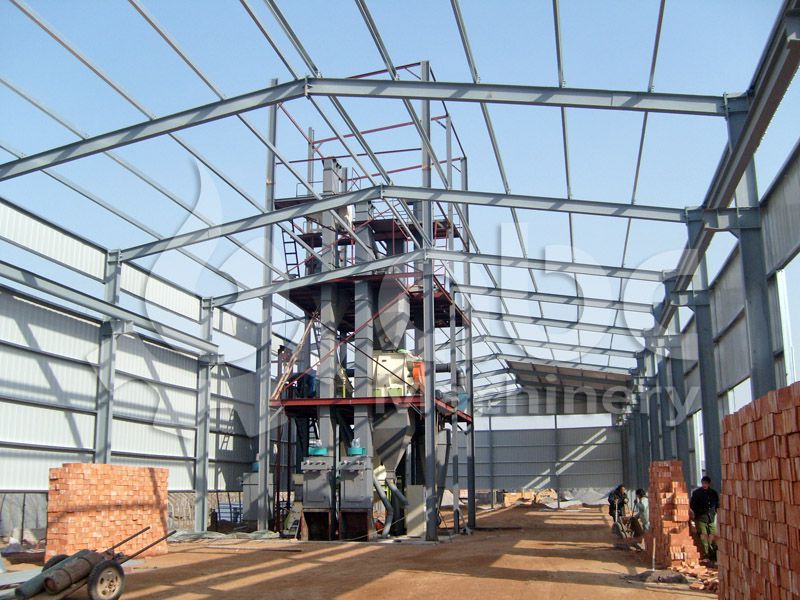
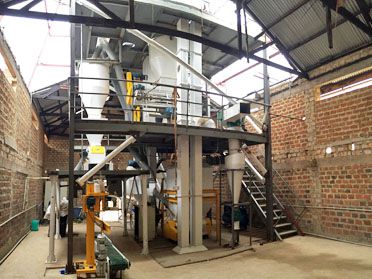
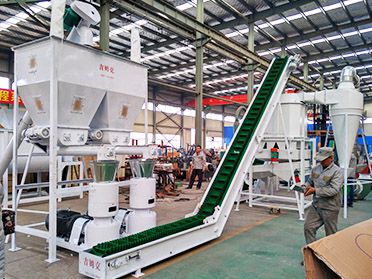
Reliable manufacturing of layer feed formulation requires robust chicken feed mill systems aligned with consistent chicken feed mill process for layer diets. Industrial mills regulate grinding sizes between 600–900 microns, mixing CV values below 10% and pelleting temperatures between 75–85°C to maintain nutrient stability. These parameters directly influence pellet durability index (PDI), typically targeted at 88–92% for layer feed.
Modern poultry feed mill plant apply automated dosing systems, MES-linked batching control and metal separation technology. Maintaining moisture at 11–12% during pelleting reduces die wear by 15–20% and supports long-term production stability. Integrated monitoring ensures fewer than 2% off-spec batches per month.
Strict QC protocols including NIR-based ingredient checks and routine PDI assessments significantly minimize production variability。
Build a quality-driven feed mill workflow that enhances consistency — Engage our engineering team for process optimization.

poultry feed formulation and layer feed formulation work together to support efficient commercial egg production. Consistent nutrient design, targeted additives and robust mill processes help maintain productivity through every production phase.